Lessons From An Iguana

“Courage is the most important of all the virtues because without courage, you can’t practice any other virtue consistently.” ― Maya Angelou

Imagine you are walking down the sidewalk, enjoying your day when all of a sudden something falls from a tree in front of you and lands on the ground. Then another. And yet another.

Once you regain your composure, you realize that what has fallen are green iguanas. Yes, iguanas. Some 6 inches long, others much longer. Seemingly dead. Falling from the trees. Just the thought of it makes me squirm.
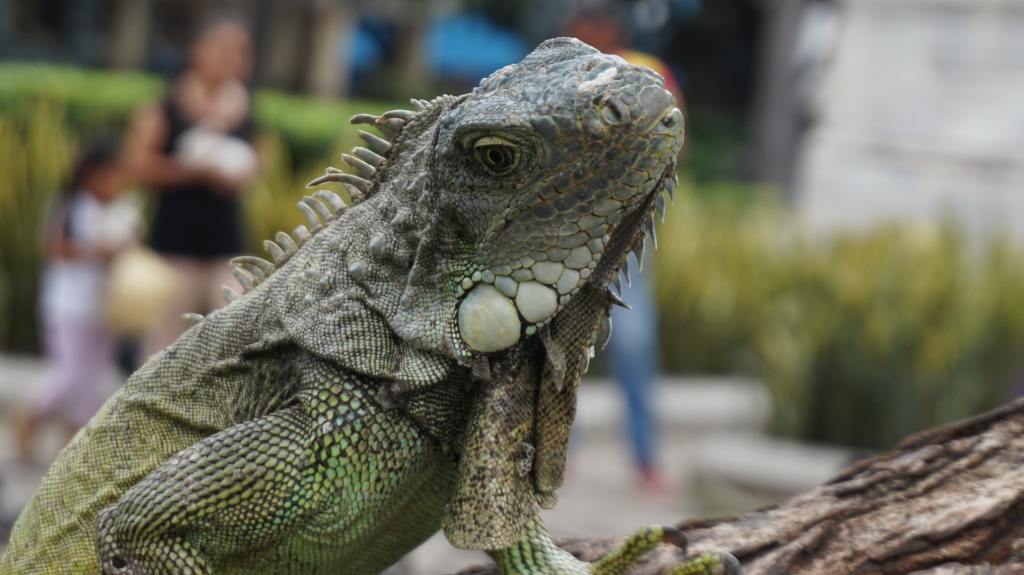
This was the scenario that played out in South Florida during an unusual cold snap this year. People were finding iguanas lying flat on their backs all over the place. By swimming pools. On roads. On sidewalks. Under trees. Why? Because the temperatures dipped down into the 40’s. Too cold for these cold-blooded creatures to function. However, they were not dead, they were frozen. Paralyzed.

Cold-blooded animals take on the temperature of their surroundings. When it is warm, their blood is warm and they are very active. When it is cold, their blood is cold and they become sluggish. Evidently, when it is unusually cold, like it was during this cold snap in South Florida, they freeze. They become paralyzed. They can no longer function.

Warm-blooded animals (such as you and me), were created to keep the inside of our bodies at a constant temperature. This gives us the ability to function and remain active in most environments. In other words, the temperature of our surroundings, whether warm or cold, does not affect our ability to function. It will not paralyze us.

This strange occurrence, made me think of my Christian walk? Am I a “warm-blooded” or “cold-blooded” Christian? In other words… do my surroundings influence my behavior and beliefs? I know that sounds weird, but just hear me out.

Let’s say I characterize “warm” surroundings as places I am comfortable in my environment. I am surrounded by like-minded people and have the ability and freedom to be who I am in Christ. I can share my faith without fear of rejection or persecution. I live my life in the Truth with support and accountability. I am active and moving. In warm surroundings, both the “warm-blooded” Christian and the “cold-blooded” Christian would function perfectly fine.

Now, let’s think about “cold” surroundings as a place I feel alone in my belief. Intimidated by the majority. An outsider. Persecuted. Rejected. I am surrounded by people who are rejecting the Truth. Or at the very least, they are justifying their behavior with the argument of widely and newly accepted social or cultural norms.

In these cold surroundings, the “warm-blooded” Christian will continue to function well. Sharing the Truth with those around without fearing persecution. However, the “cold-blooded” Christian, will be fearful. They will not speak out. Potentially blend in with the crowd. Paralyzed.

This may be a silly analogy. But I really had to do some soul searching.

Do I keep faithful and follow the truth regardless of my surroundings? Do I block what is going on around me from influencing my behavior? Do I nurture my relationship with Christ and remain active and steadfast in my beliefs? (Warm-blooded)

Or do I allow the climate to influence my behavior and beliefs? As long as I am in a warm environment, I am active and comfortable, but once the environment is cold and negative, do I become paralyzed? Do I find it hard to share my faith? Do I even start to question the truth? Blend in with the crowd… Join in with inappropriate jokes? Participate in gossip? Justify behavior? (Cold-blooded)

I believe as Christians, if we aren’t careful, we can take on the temperature of our surroundings. When we are immersed in cold, negative climates, the Truth may start to become murky to us. We might begin to question what we believe and let the fear of rejection paralyze us. So it is important for us to protect ourselves by staying in the Word.

Peter reminds us, “But in your hearts revere Christ as Lord. Always be prepared to give an answer to everyone who asks you to give the reason for the hope that you have. But do this with gentleness and respect, keeping a clear conscience, so that those who speak maliciously against your good behavior in Christ may be ashamed of their slander.”1 Peter 3:15-16 (NIV)

We are called to remain steadfast in the Truth regardless of our surroundings.

A quick funny story I heard the other day… In Central America, iguana meat is a delicacy. And during this cold snap in Florida, a man (originally from Central America, now living in Florida) saw several iguanas on the ground and could not believe his good fortune. Thinking they were dead he scooped several up, put them in his back seat and headed home to cook them for dinner. Well, you guessed it. As the car warmed up their bodies, the iguanas came back to life. They started running all around in his car, nearly causing the man to crash!

Let me end with this… These “cold-blooded” iguanas almost met their demise because they took on the temperature of their surroundings and became paralyzed!

“Be strong. Take courage. Don’t be intimidated. Don’t give them a second thought because God, your God, is striding ahead of you. He’s right there with you. He won’t let you down; he won’t leave you.” Deuteronomy 31:6 The Message (MSG)

Sink or Float

“Lean on me when you’re not strong and I’ll be your friend, I’ll help you carry on…” ~ song lyrics by Bill Withers

Physics. Not one of my favorite subjects. However, I do remember the “Sink or Float” experiment as a young child.

Do you remember? The teacher would have a clear bucket on the table filled with water and several different items sitting next to it. As she held each item up she would ask the class, “Will this sink or float?” We would give our prediction, then she would drop the object into the water and we would watch expectantly. Hoping that our guess was right.

Stone, sink. Cork, float. Marble, sink. Rubber ball, float. Coin, sink. Lego, float. We may not have fully understood at the time why buoyant objects float and dense objects sink. But what we did realize right away was that no matter how many times she dropped that same object into the water, it consistently did the same thing. If it floated the first time, it floated every other time. If it sank the first time, it sank every other time.

So is it possible to help a sinking object float? Well yes, of course. But one of two things must happen. The object cannot remain the same. Something about it MUST be changed.

1. We can change the shape of the object. We know if we take a metal pipe and drop it into the water, it will sink to the bottom. However, if we take that same pipe, hammer it out to a flat piece of metal and bend it into the shape of a boat, it will float. 

2. We can attach the object to something that does float. Every time we drop a marble into the water, it will sink. But what if we take that same marble and put it on a piece of foam? It will float. By attaching it to something else that will float, the marble is able to float.

OK, so much for the physics lesson.

My question to you is this… In the midst of today’s “social distancing” procedures and “stay at home” order, are you floating? Or are you sinking? We are all being affected. Unfortunately though, while some people are able to float others are sinking.

If you are currently floating (still have a job, able to pay your bills, enjoying time at home with your family, etc), you will probably continue to float. You may experience a little bit of water flowing over top of you at times, but most likely you will rise back up to the top and continue to float. “I will praise you, Lord, with all my heart; I will tell of all the wonderful things you have done.” ~ Psalm 9:1 (GNT)

If you are currently feeling like you are sinking (lost your job, isolated alone, lost a loved one, etc) there are actually ways to get you floating again. Just like the metal pipe and the marble, you can make a change and begin floating again.

1. Changing shape. Just breathe. Did you know that taking a very deep breath and completely filling your lungs with air will make the difference of whether a person will sink or float in water?  This changes the shape of your chest enough to make you float. Yes, that is all it takes… a deep breath and you will be able to float!

There may be many things in our life right now that are not in our control.  So let’s focus on what we can control (attitude, perspective, gratitude). Take a deep breath. Breathe in and let the Holy Spirit create a new shape in you. “This is what the Sovereign Lord says: Look! I am going to put breath into you and make you live again!” ~ Ezekiel 37:5 (NLT)

2. Attach yourself to something that floats. When someone is drowning in water, they can begin to float again if they reach out and hold on to the life preserver. You’ve got this! Reach out. Hold on. Jesus is your lifeline. Read the Scripture. Pray. “Rescue me, Lord, as you have promised; in your goodness save me from my troubles!” ~ Psalm 143:11 (GNT)

 Also, reach out and hold on to your friends who are “floating”. Ask and allow them to help. Right now, we all need to lean on one another. “Carry each other’s burdens, and in this way, you will fulfill the law of Christ.” ~ Galatians 6:2 (NIV)

These really are different times. We need more than ever to stand on the promises of God.  “I have told you these things, so that in me you may have peace. In this world you will have trouble. But take heart! I have overcome the world.” ~ John 16:33 (NIV)

Breathe. Hold On … Float.

Wallow or Withstand?

“The tests we face in life’s journey are not to reveal our weaknesses but to help us discover our inner strengths. We can only know how strong we are when we strive and thrive beyond the challenges we face.”
― Kemi Sogunle

We all tend to wallow in our unfortunate circumstances at times.  It gives us a little time to feel sorry for ourselves, and maybe, just maybe, get others to feel sorry for us too.  But then, we must take the step to move on.  Pick ourselves up.  Dust ourselves off.  And continue to travel along this journey called life.

What happens if you live your life continuing to wallow instead of choosing to withstand?  You define yourself as the circumstance.  Everything you do, every decision you make, everything you see is through a tainted lens.  A perspective of … “well, this happened to me, so …”  And unfortunately, I believe life passes you by.

I have written the stories of many of my friends here in Knysna, South Africa.  So many tragedies.  So much poverty.  So many unfortunate circumstances.  However, I love being able to share how many have overcome and withstood the test of this life.  They don’t wallow in their circumstance nor allow it to define them.  Instead, they learn from it, overcome it, withstand it and move forward.  When I have them read their story in writing, they are amazed at all that they have truly withstood over the years.

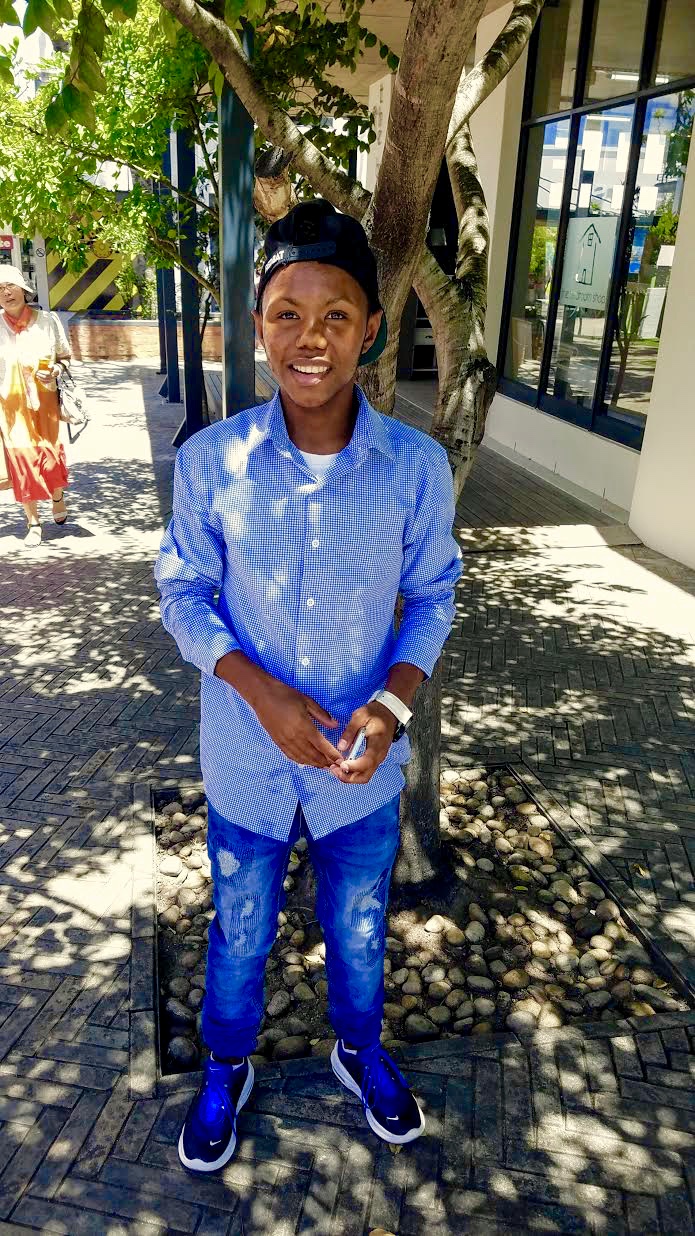
Today, I’d like to introduce Dyllan.  I met him 2-years ago when he was participating in the “Hands and Heart” program sponsored by Youth for Christ.  He has wanted me to write his story since the first day I met him.  “Why?”, I wondered.  Everyone else is so reluctant to share their stories.

0-3.jpg
Hands and Heart Class of 2017

(*Sidenote – “Hands and Heart” is a 1-year skills training program.  Boys who have dropped out of school are given the opportunity to learn basic construction skills and welding.  They attend class 4-days per week for the entire year.  From there, men in the community work on the boys’ behalf to help them secure jobs.)

When you read this young man’s story, it is obvious he has suffered through many serious health issues.  No doubt.  But you, the reader, must decide for yourself whether you think he will choose to wallow or withstand…  Will he allow his circumstances to define who he is?  Or will he push through?

0-1.jpg

Dyllan Muller, the ever smiling 21-year old, was born and raised in the Hornlee area of Knysna, in the Western Cape of South Africa.  Hornlee is home mostly to the “Coloured” residents of Knysna.  You can read a little bit more about the history of apartheid and designated living areas in “What is a South African “Township””.

Dyllan’s parents brought their baby boy home to their ever-growing family back in 1998.  He was their third child joining a 3-year old brother and 5-year old sister.

Within 7 months of his life, he was diagnosed with kidney failure in both kidneys and placed on dialysis immediately.  A 7-month old baby on dialysis.  This became this little baby’s life.  Traveling back and forth to Cape Town (a 5-hour drive away) to receive treatment at a much more equipped hospital.

By the time Dyllan reached age 3, his father walked out on the family.  A story like so many others.  Dyllan remembers his dad yelling at his mother often and believes he struggled with alcohol addiction. 

So there they were.  A single mom left to raise three young children on her own… one who was very ill.  A child she must travel often with to Cape Town for treatments.  And two she must leave behind each trip.

Throughout the years, Dyllan received Peritoneal Dialysis.  He was either in the hospital in Cape Town or sent home with a machine.  This worked for a couple of years until he developed a terrible abdominal infection at the age of 5.

(The most common problem with peritoneal dialysis is peritonitis, a serious abdominal infection.  This infection can occur if the opening where the catheter enters your body becomes infected or if contamination occurs as the catheter is connected or disconnected from the bags. Infection is less common in catheters, which are placed in the chest. Peritonitis requires antibiotic treatment by your doctor. – nationalkidneycenter.org)

In order to treat the peritonitis, Dyllan was placed on strong antibiotics. He was then switched to Hemodialysis, where they inserted a catheter into his neck while he continued to wait for a kidney transplant.

During the course of his treatments, Dyllan’s hearing declined.  He tried to keep up with school.  It was tough.

By grade 5, Dyllan was 12 years old and his health was failing drastically.  He missed the entire year of school as he was in and out of the hospital.  He finally received a kidney transplant in 2011.  Things were looking up.

When he returned to school, the administration pushed him through grades 6 and 7.  He was not passing.  Not receiving the educational foundation he needed.  Still he was moved ahead.

While attending grade 7 at age 15, Dyllan’s hearing had declined so much that he had become completely deaf in both ears.  The doctors believe that it was caused by the intense antibiotics and treatments he received over the years.  This young kidney recipient was now deaf.

Learning of his story, a doctor in Cape Town suggested that Dyllan would qualify for a Cochlear Implant through Stellenbosch University’s Project Hope.  This meant that the surgery would be subsidized if Dyllan’s mom could raise R30,000 of the R189,00 needed (approx. $3,000 of $15,000).  This is a lot of money for most people, let alone a single mom working for minimum wage (approx. $12 per day… not per hour… per day).

Dyllan’s community heard of his need.  They showed up in a big way.  The students and faculty  at his school, Sunridge Primary, joined together to donate money.  The local newspaper printed an article asking for supporters.  It worked!  Dyllan received a Cochlear Implant in 2012 and can now hear in one ear.

Dyllan was happy he could hear again.  But going into the surgery as a 15-year old, Dylan knew nothing about Cochlear implants.  He had no idea that when he awoke from surgery, he would have a permanent small box attached to his head.  Nobody prepared him.  Now, 7 years later, he still won’t allow people to see it.  He wears a hat or headband at all times.

Everything should be fine now, right?  Not quite.  Dyllan was so far behind in school.  Even though he wasn’t passing, he kept getting pushed along, until he finally dropped out in Grade 10.

This decision left Dyllan with few choices of a future career.  A decision made by so many boys in the townships.  But then Dyllan got a break.  He was accepted into Youth for Christ’s “Hands and Heart Program”  where he learned basic construction skills.  He completed the program and secured a job.

A dream for many high school dropouts. 

Weeks after beginning his construction job, Dyllan quit.  Due to his previous health issues, he felt he really shouldn’t be doing heavy lifting.  Unfortunately he has not found another job in the past 2-years.

So, I ask you… Is he wallowing or is he withstanding?

I believe Dyllan is at a crossroads in his life.

Dyllan can either see himself as a boy who suffered kidney failure and lost his hearing.  Thus putting many conditions on possible jobs.  A boy who wants to tell his story so that others will feel sorry for him and continue to wallow in his circumstance.

OR

Dyllan can see himself as a successful kidney recipient who has had his hearing restored with a cochlear implant.  A young man with a second lease on life.  A person who has withstood the unfortunate circumstances life has given him and wants to tell his story to others to inspire them.

Only time will tell if Dyllan will wallow and let his unfortunate circumstance define who he is.  Or if he will withstand the test and see the blessings he has received.

The choice is his.

Almost … but not quite.

“Loneliness and the feeling of being unwanted is the most terrible poverty.” – Mother Teresa

Have you ever experienced the “Almost … but not quite”?  You almost made the team, but not quite.  You almost got into the Honor Society, but not quite.  You almost crossed the finish line first, but not quite.  You almost passed the test, but not quite.  We can all think of times we had an  “almost … but not quite” scenario.  We wanted something so badly, but we just missed the mark.

It is a frustrating, disappointing and heartbreaking place to be.

Now imagine being almost part of a family, but not quite.  Feeling unwanted.  Given a place to live out of obligation.  Sitting on the fringes of the family circle.  Nobody rejoicing in your successes.  Nobody helping bear the burden of your hurts and disappointments.  You are just the niece.  Just the cousin.  Just another mouth to feed.  Just a burden.

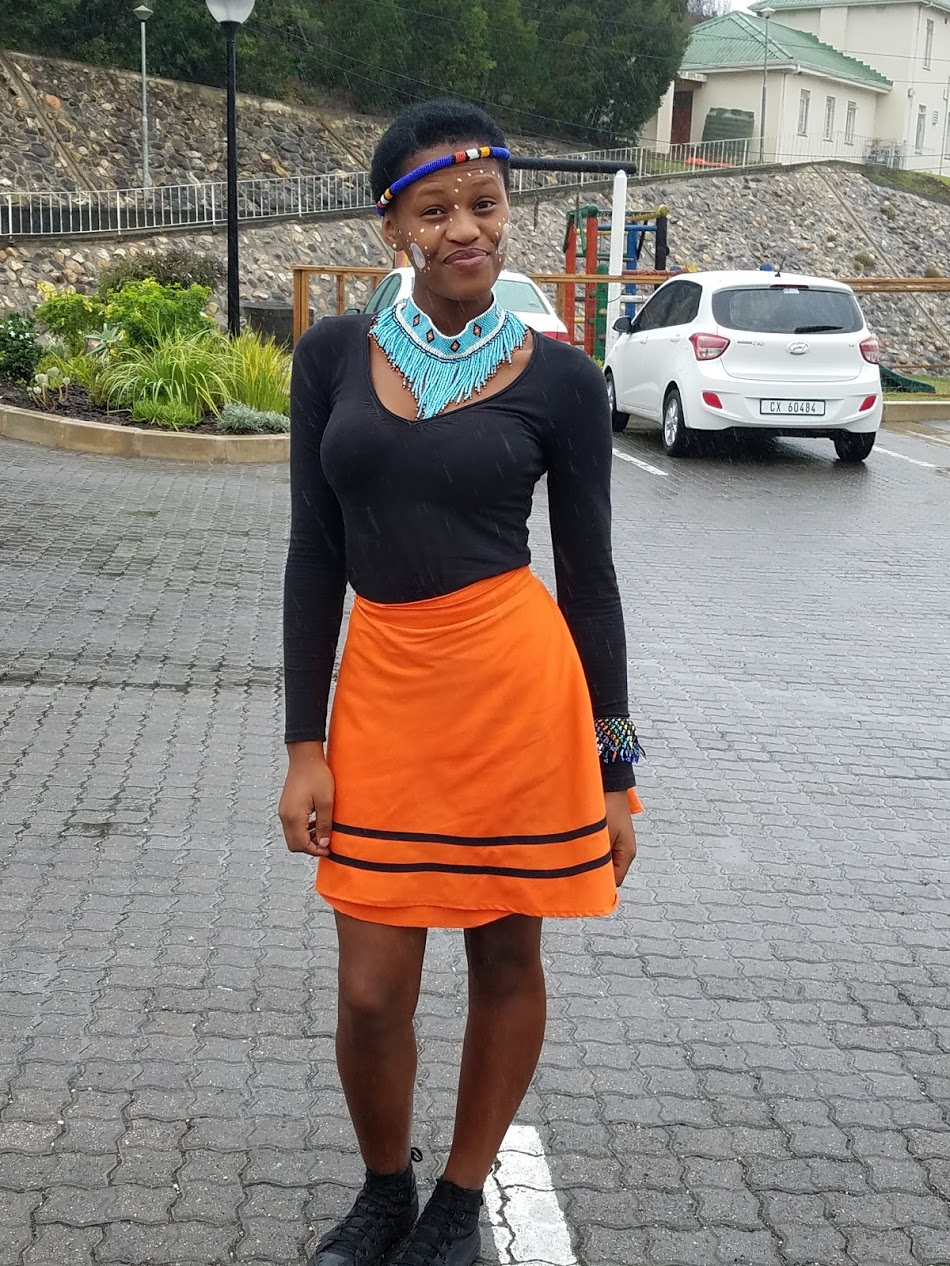
Ntsibeng Shete is a  21-year old Sotho girl whom I met 2 years ago (January 2017).  At that time, she was in her metric (senior) year at Concordia High School in the Knysna Township with her hopes set on attending university.  She and I worked together after school navigating through Life Science.

(Side Note: Sotho /su:tu is one of many tribes in South Africa.  The sotho people speak a language called Sesotho.  It is one of the eleven official languages of South Africa.  This is Ntsibeng’s native tongue.  She now speaks Sesotho, Isixhosa and English).

20190124_110553
Ntsibeng

Born in 1997 in the Mtata Township on the Eastern Cape, Ntsibeng’s life began with tragedy.  She almost had a dad in her life, but not quite.  Two weeks after she was born, her father died of complications from diabetes.  She would never get to know a father’s love.

Instead, her family would be all women… Ntsibeng, mom and grandma.   A common family unit in South Africa’s Townships.   Absent dads.  Present grandmothers. 

This could and should work.  It did for six years.  Then Ntsibeng’s mom grew restless and decided it was time to make a change.  So she did.  She moved several hours away to the Western Cape and left Ntsibeng behind.  Yes, she left her 6-year old daughter behind.  Ntsibeng felt abandoned.

For the next four years, Ntsibeng lived alone with her grandma.  Although she longed for her mom to return, Ntsibeng loved her grandma dearly.  “She was my everything”, she said with a big smile on her face. 

Little did this young girl know how drastically her life was about to change in 2007.  She was 10-years old and excited that her mom decided to return from the Western Cape.  What she didn’t know was that her mom was very ill.  She had contracted HIV and TB while away.  She had also given birth to a son who Nsibeng knew nothing about.  A 4-year old little brother.

As she began to process these new life changes, the return of her mom and the introduction of a younger brother, Ntsibeng’s grandma was diagnosed with and died of breast cancer.  2007 proved to be a very emotional year for such a young girl.  A roller coaster of emotions.  Heartbreak in the loss of her grandmother.  Joy in the return of her mom and new brother.  Ntsibeng was still so young.  She believed things would be OK.  They would begin to live as a new family unit.

Or would they?  “Almost … but not quite.”

In July of 2008, only one year later, her mom got worse.  Ntsibeng, 11-years old at the time, remembers her mom telling her to go find someone to help.  She ran out of the house to find a neighbor, but when she returned, her mom had already passed away.  Ntsibeng honestly believes that her mom sent her away so that she would not watch her die.  One final act of love from a mom with whom she had spent so little time.  A relationship almost mended, but not quite.

Funerals are expensive.  Especially to those living in poverty.  To pay for these expenses, the relatives had to sell the grandmother’s house. This in turn left an 11-year old girl and 6-year old boy with no place to live.  What would happen next?  The decision was made to separate the sibliings.  Baxolele (her brother) would remain in the Eastern Cape and live with his grandmother’s sister.  Ntsibeng would be sent to the Western Cape to live with her mom’s brother and his wife.

With so much chaos, turmoil and uprooting in her life, Ntsibeng missed a lot of school.  She arrived in Knysna in 2009, and almost passed grade 4, but not quite.  She would have to repeat.

The years moved along. Life in her uncle’s home was hard.  His wife refused to accept Ntsibeng as “their” child.  They had their own children.  Ntsibeng was just the niece.   A “Cinderella” life style ensued.  Ntsibeng felt like the unwanted outsider.   Made to do all of the chores while her cousins played.  Foster care money was received, but not spent on Ntsibeng.  She still remembers having no clothes that fit.  “When I moved up to High School (grade 8), I still had to wear the primary school uniform for quite some time,” she said sadly.   It was embarrassing for her.

Finally in 2014, when entering grade 9, Ntsibeng was able to convince her mom’s sister to allow her to live with her family in the same township in Knysna.  Baxolele joined her there (from the Eastern Cape), filling the 2-bedroom concrete block home with 9 people.  Ntsibeng and Baxolele were sent to sleep outside in a wooden shack with no water or electricity.  Unfortunately, the same “Cinderella” life style began to unfold for her.  After all, she was once again, just the niece.  Her aunt and uncle had many of their own children to care for.

Ntsibeng watched her cousins participate in  extra curricular activities, but to her, the answer was always “No, we don’t have enough money.”   It was made clear from the start of her matric year, that they would only support their daughter to University.

Ntsibeng started to flounder.  What would she do now?  She wanted to continue her education,  but was not accepted into University for 2018.  Her marks were almost high enough, but not quite.  She knew she had to rewrite two of her courses in order to apply again for 2019.

Since that would be at the end of 2018, she decided to get a job to get her through the year.  She saw an ad for a job at the hospital at the information desk.  She applied, interviewed and got the job. 

20180315_080804
Ntsibeng dressed for a job interview.

Ntsibeng struggles with feeling loved by family.  Although she was fortunate that relatives allowed her to stay with them over the years, she never felt as though she was looked at as “their” daughter.  Instead, she was always an outsider.  Almost part of each family, but not quite.

This year, Ntsibeng was accepted to the University of Fort Hare in the Eastern Cape.   She almost started her college career, but not quite.  She panicked.  She had never been to see the University.  She knew she would have to look for accommodations.  She had nobody to counsel her or willing to go with her to sort things out.  She could not get herself to make the 6-1/2 hour trek there with so much uncertainty.  So, she didn’t go.  A missed opportunity.  A setback for another year.

Ntsibeng is a sweet girl.  She continues to bounce back from life’s disappointments.  This week she has applied to and is training for a server job in a restaurant.   She knows that her aunt and uncle want her out.  If she lands this job, she just may be able to rent a shack of her own.

Hopefully next year, 2020, Ntsibeng will be a University Student.  She does not need another  “almost … but not quite” year!

20190124_110525
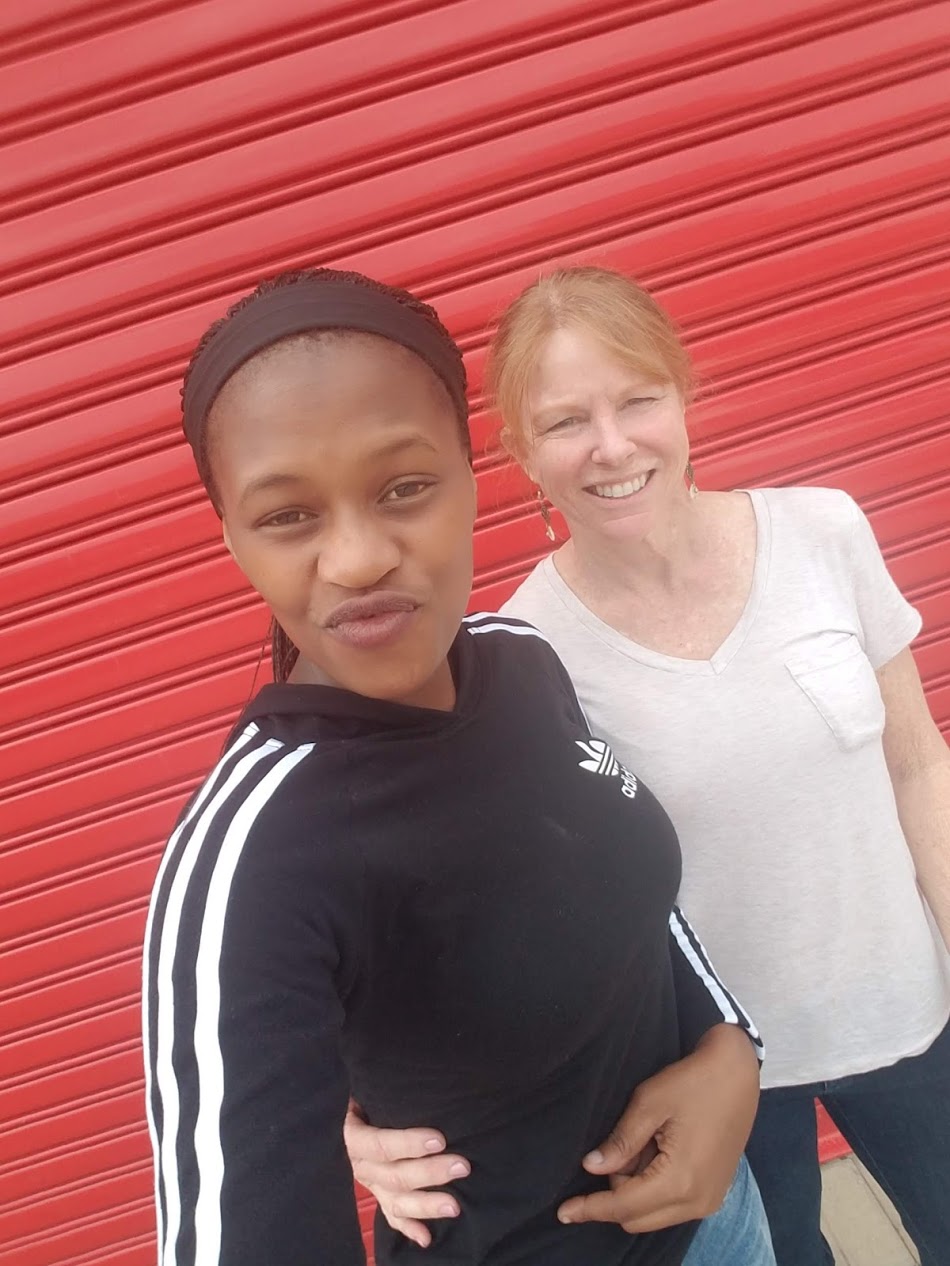
Ntsibeng and Tracy

“C”ooking Good!

“Keep your heart open to dreams. For as long as there’s a dream, there is hope, and as long as there is hope, there is joy in living.” ~ Author Unknown

Dreams.  We all begin dreaming of our future at a very young age.  Preschoolers proudly proclaim their future occupation at their graduation ceremony…  Fire Fighter, Doctor, Vet, Super Hero and Princess to name a few.  They believe they can be whatever they want to be.

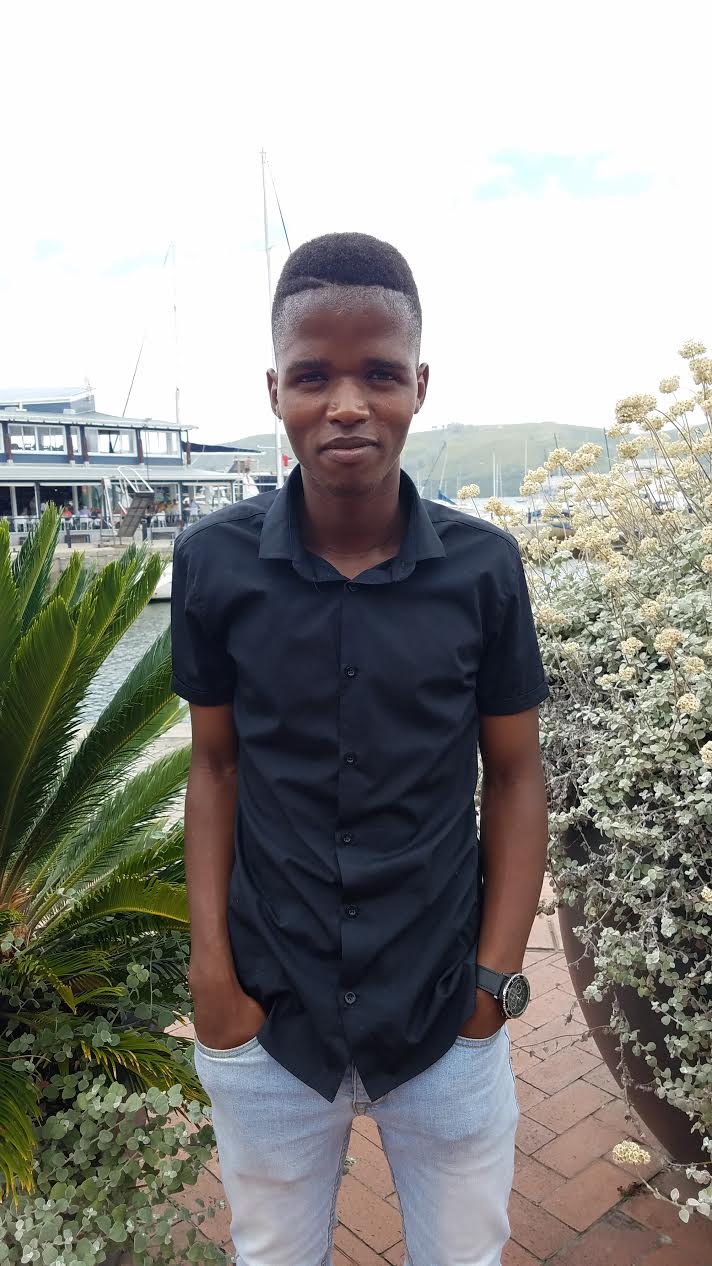
My new friend Siphenkosi Sihono also has a dream — to be a chef.  “I really enjoy cooking,” the 24-year old told me over a hamburger the other day.

0

But unlike many of us, dreaming of a future was not something Siphe (pronounced See-pay) did as a youngster.  With so many obstacles and failures in his life, why dare to dream?

Born in the Eastern Cape of South Africa in a village outside of Mount Frere, Siphe’s mom relinquished him to his grandmother’s care, immediately after his birth.  “Why?”, you may ask.  She was married at the time… but not to her baby boy’s father.  She knew her husband would never accept him nor allow her son to grow up in their household.

And so began his life …  Siphe would grow up in his grandmother’s wooden home with no running water and no electricity.  He became part of a household where 9 other cousins were already living.  A very poor family where enough food was often a challenge.

But when asked how his life was growing up, Siphe responded, “My Gogo (grandmother) is a good woman.”  His grandmother made them a family.  She gave them a place to live and provided what little she could.  He was happy.

(Side Note… Mount Frere is a very small, underdeveloped town in the Eastern Cape.  The closest residents to the town live in rural villages ruled by Tribal Chiefs.  These villages are still lacking basic services like proper roads, electricity and water.  River water is still used by many who don’t have water tanks to collect their water.)

Throughout the years, Siphe’s mom would visit him when she could.  His father did not.  He had no contact with his dad until he was 16-years old.  

None the less, life went on… Siphe attended the only primary school in the village where the education was very poor.  When he started High School, the only school around was 5 kilometers away.  With no transportation available,  he hiked to and from school each day.  There he attended but failed to pass Grade 9.

It was then that Siphe learned that his father, was moving to Knysna with his wife.  Knowing that the schools were better in the Western Cape, Siphe asked if he could move with them.  He pleaded his case for a better education.  Surprisingly, his father and his wife agreed.

In 2013, Siphe moved to the Knysna township with his dad and stepmom.  They rented a wooden shack with no electricity and no running water.   Siphe didn’t complain.  He was used to that way of life.  This was his chance to get a better education.  This was going to be the turning point in this 18-year old’s life.  He was starting a new school in a new town.

Throughout the school year, things in his household deteriorated.  His dad was drinking.  The yelling started.  His stepmom left. The turmoil took a toll on Siphe.  His studies suffered.  He failed grade 9 again. 

Siphe was now 19-years old, with no hope of finishing High School.  His dad had given up on him and insisted he get a job.

His goal to finish school, had become unachievable.  This only confirmed why you do NOT dare to dream!

As he walked around town handing out his CV (resume), a woman took notice.  She was the manager at the grocery store and saw that he was 19-years old and had not yet completed and passed grade 9.  Unacceptable.  This boy must be in school.  She contacted our friend Ella to see if she could help. 

Ella and her business partner Penny met with Siphe and gently encouraged him to move into Ella’s Safe House and return to school.  Siphe took them up on the offer and moved into the Lukhanyiso Safe House.  So, at 19-years old, Siphe would attend Grade 9 again at a different high school in the same Knysna township.  Would the third time be the charm?

Yes!  He passed grade 9 with a bit of struggle.  But he passed!  And it was now time for this 20-year old to have some privacy and be a little more independent.  He was so much older than the other children in the Safe House, so Ella moved Siphe into a wooden house on property her mother owned.   Due to a dispute over the land, Siphe’s new shack became a target.  It was burned to the ground with the few things he owned.

Time to give up?  Throw in the towel?  He was struggling with his grades so much, that even Ella recommended he leave school in grade 10 and learn a trade. 

Siphe wasn’t ready to give up.   He was determined to achieve his goal.  And he did.  He successfully completed and passed, not only grade 10, but 11 and 12!  He matriculated (graduated) from high school at age 22.

As I spoke with Siphe and to others about him, it is obvious he has never been one to get into trouble.  He is very respectful and endearing with a squeaky clean reputation.  He put his nose to the grindstone, stayed out of trouble and accomplished his goal of finishing high school.

Siphe now dares to dream of a future.  He wants to be a chef!  He envisions himself working as a chef on a cruise line or in a hotel.   When asked if he had ever been on a boat, his answer was “No, never.”  Hmmm, I think he may want to go on a boat ride before accepting any jobs on the water!

Working toward his new dream, Siphe, with financial support from the Khayamandi Foundation, is currently attending South Cape College in Oudtshoorn, South Africa.  He is beginning Year 2 of a 3-year program where he will earn a diploma in Hospitality and Catering.  His classes include Catering Theory, Applied Management, Safety and Sanitation, and Nutrition and Menu Planning.  As part of the program he must complete practicals where he works in the industry.

Siphe has to work hard to succeed.  Schooling does not come easy to him.  But he is determined to succeed and is willing to put in the work.  He now knows he can accomplish his goals and dare to dream of a future!  

siphe 4