“Where flowers bloom, so does hope.” – Lady Bird Johnson
I don’t know about you, but I suffer terribly from pollen allergies in the spring! Because of that, this season is one of my most difficult each year. That nasty yellow layer of dust floating in the air and covering everything in sight can be so thick at times, that it is hard to tell the true color of some outdoor objects.
There are weeks in April that I am on two, not one, but two different oral antihistamines, allergy eye drops and allergy nasal spray all at the same time. This usually helps give me some relief, but only for short periods of time. I am uncomfortable, annoyed and down right miserable with red, swollen, watery and extremely itchy eyes!
Being outside this time of year is a real struggle for me. Yet, that is exactly where I want to be! The weather is perfect. And as I’ve mentioned in previous blogs, my favorite form of exercise is walking outside.
I had this idea the other morning when I left to walk, that if I wore sunglasses and a baseball cap and essentially walked with my head down, I would be able to stop the pollen from irritating my eyes. Nope. It didn’t work. I could not avoid the irritation of the pollen.
Finally I gave up trying to avoid the pollen. I stopped and looked up. What I saw was incredible. The street was lined with beautiful pink flowering trees. The culprit of the pollen!
I realized then, had I continued looking down, trying to avoid the pollen, I would have missed the beautiful blooms.
It was then that I thought, “Although I am suffering through the irritation of the pollen now, I will be able to enjoy new blooms later!”
Wow. Isn’t that true. For it is the pollen that leads to the production of seeds that will create new plants to grow and bloom.
We all experience seasons of life that are uncomfortable and annoying. These circumstances and situations can be thought of as our “pollen”. They make us irritated and downright miserable. We lose out on a promotion at work. We are being emotionally drained in a relationship. We learn we have to move our family to a new town. An acquaintance/family member feels the need to always give unsolicited advice. We feel our morning or daily routine is full of chaos. And so on.
We often can’t avoid the “pollen”. But we can bloom because of it.
For it is during this season of discomfort that we grow and learn. We learn to speak up for ourselves or figure out what we need to do to receive the next promotion (even if that means changing jobs). We learn to end toxic relationships and set limits on others. We learn to embrace the opportunity for new beginnings. We learn to protect our time. And we learn better ways to do things to create a less chaotic day. We learn. We grow. We bloom!
Look up. Turn your eyes to God.
“I will be like the dew to Israel. It will blossom like a lily. Like the cedar trees in Lebanon, its roots will be firm. The people will be like spreading branches. They will be like the beautiful olive trees. They will be like the sweet-smelling cedars in Lebanon.”Hosea 14:5-6 (International Children’s Bible)
Don’t allow this uncomfortable season of life to discourage you. Push through it and allow the “pollen” to help you grow and bloom.
“If there is no struggle, there is no progress.” ~Frederick Douglass
Anybody who knows me, knows that my preferred form of exercise is walking. I love to walk outside early in the morning. Often before the sun is even up. This is great in the spring, summer and fall months. But when the winter rolls in, it is impossible for me to get myself up early to walk. I will not go outside in the cold darkness. I find it unbearable.
I haven’t really had to worry about that the past several years, as Kurt and I have been blessed to spend our winters in South Africa. And because January, February, and March is summer in South Africa, I have been able to carry on with my morning walking routine.
This year, however, I made the decision not to return to South Africa. This means I will have to figure out how to deal with the winter months. I can assure you I will not get out of bed in the dark and cold of morning to go for a walk. Does that mean walking is off the table for the winter? Will I allow the dark, cold mornings to take away my joy of walking?
No. You see, what I have noticed is that regardless of the cold temperatures, if I just hang in there and wait until the sun comes out, what is unbearable in the dark becomes bearable in the light. Once the sun hits my face, a warmth comes over me that I cannot feel in the dark.
There are times in our life that feel cold and dark. Bad results from a health test. Turmoil in a relationship. Termination from a job. Financial crisis. A wayward child. Death of a loved one. So many things can leave us feeling scared, lost, sad. It can be a cold, dark place. One that is unbearable to us.
The good news is, the sun always rises! Just hang in there and wait. Then bask in its warm rays… A verse of scripture. Kind words from a friend. An unexpected phone call. New opportunities. A warm day in the middle of winter.
Does this mean all of our problems will go away? No. But it does mean we don’t have to walk in darkness. In John 8:12, Jesus says “I am the light of the world. Whoever follows me will never walk in darkness, but will have the light of life.” In other words, those who walk in the light have a presence of God inside of them.
“Loneliness and the feeling of being unwanted is the most terrible poverty.” – Mother Teresa
Have you ever experienced the “Almost … but not quite”?You almost made the team, but not quite.You almost got into the Honor Society, but not quite.You almost crossed the finish line first, but not quite.You almost passed the test, but not quite.We can all think of times we had an “almost … but not quite” scenario.We wanted something so badly, but we just missed the mark.
It is a frustrating, disappointing and heartbreaking place to be.
Now imagine being almost part of a family, but not quite.Feeling unwanted.Given a place to live out of obligation.Sitting on the fringes of the family circle.Nobody rejoicing in your successes.Nobody helping bear the burden of your hurts and disappointments.You are just the niece.Just the cousin.Just another mouth to feed.Just a burden.
Ntsibeng Shete is a21-year old Sotho girl whom I met 2 years ago (January 2017).At that time, she was in her metric (senior) year at Concordia High School in the Knysna Township with her hopes set on attending university.She and I worked together after school navigating through Life Science.
(Side Note: Sotho /su:tu is one of many tribes in South Africa.The sotho people speak a language called Sesotho.It is one of the eleven official languages of South Africa.This is Ntsibeng’s native tongue.She now speaks Sesotho, Isixhosa and English).
Ntsibeng
Born in 1997 in the Mtata Township on the Eastern Cape, Ntsibeng’s life began with tragedy.She almost had a dad in her life, but not quite.Two weeks after she was born, her father died of complications from diabetes.She would never get to know a father’s love.
Instead, her family would be all women… Ntsibeng, mom and grandma. A common family unit in South Africa’s Townships. Absent dads.Present grandmothers.
This could and should work.It did for six years.Then Ntsibeng’s mom grew restless and decided it was time to make a change.So she did.She moved several hours away to the Western Cape and left Ntsibeng behind.Yes, she left her 6-year old daughter behind.Ntsibeng felt abandoned.
For the next four years, Ntsibeng lived alone with her grandma.Although she longed for her mom to return, Ntsibeng loved her grandma dearly.“She was my everything”, she said with a big smile on her face.
Little did this young girl know how drastically her life was about to change in 2007.She was 10-years old and excited that her mom decided to return from the Western Cape.What she didn’t know was that her mom was very ill.She had contracted HIV and TB while away.She had also given birth to a son who Nsibeng knew nothing about.A 4-year old little brother.
As she began to process these new life changes, the return of her mom and the introduction of a younger brother, Ntsibeng’s grandma was diagnosed with and died of breast cancer.2007 proved to be a very emotional year for such a young girl.A roller coaster of emotions. Heartbreak in the loss of her grandmother. Joy in the return of her mom and new brother. Ntsibeng was still so young. She believed things would be OK.They would begin to live as a new family unit.
Or would they?“Almost … but not quite.”
In July of 2008, only one year later, her mom got worse.Ntsibeng, 11-years old at the time, remembers her mom telling her to go find someone to help.She ran out of the house to find a neighbor, but when she returned, her mom had already passed away.Ntsibeng honestly believes that her mom sent her away so that she would not watch her die. One final act of love from a mom with whom she had spent so little time.A relationship almost mended, but not quite.
Funerals are expensive.Especially to those living in poverty.To pay for these expenses, the relatives had to sell the grandmother’s house. This in turn left an 11-year old girl and 6-year old boy with no place to live.What would happen next? The decision was made to separate the sibliings.Baxolele (her brother) would remain in the Eastern Cape and live with his grandmother’s sister.Ntsibeng would be sent to the Western Cape to live with her mom’s brother and his wife.
With so much chaos, turmoil and uprooting in her life, Ntsibeng missed a lot of school.She arrived in Knysna in 2009, and almost passed grade 4, but not quite.She would have to repeat.
The years moved along. Life in her uncle’s home was hard.His wife refused to accept Ntsibeng as “their” child.They had their own children.Ntsibeng was just the niece. A “Cinderella” life style ensued.Ntsibeng felt like the unwanted outsider. Made to do all of the chores while her cousins played.Foster care money was received, but not spent on Ntsibeng.She still remembers having no clothes that fit.“When I moved up to High School (grade 8), I still had to wear the primary school uniform for quite some time,” she said sadly. It was embarrassing for her.
Finally in 2014, when entering grade 9, Ntsibeng was able to convince her mom’s sister to allow her to live with her family in the same township in Knysna.Baxolele joined her there (from the Eastern Cape), filling the 2-bedroom concrete block home with 9 people.Ntsibeng and Baxolele were sent to sleep outside in a wooden shack with no water or electricity.Unfortunately, the same “Cinderella” life style began to unfold for her. After all, she was once again, just the niece.Her aunt and uncle had many of their own children to care for.
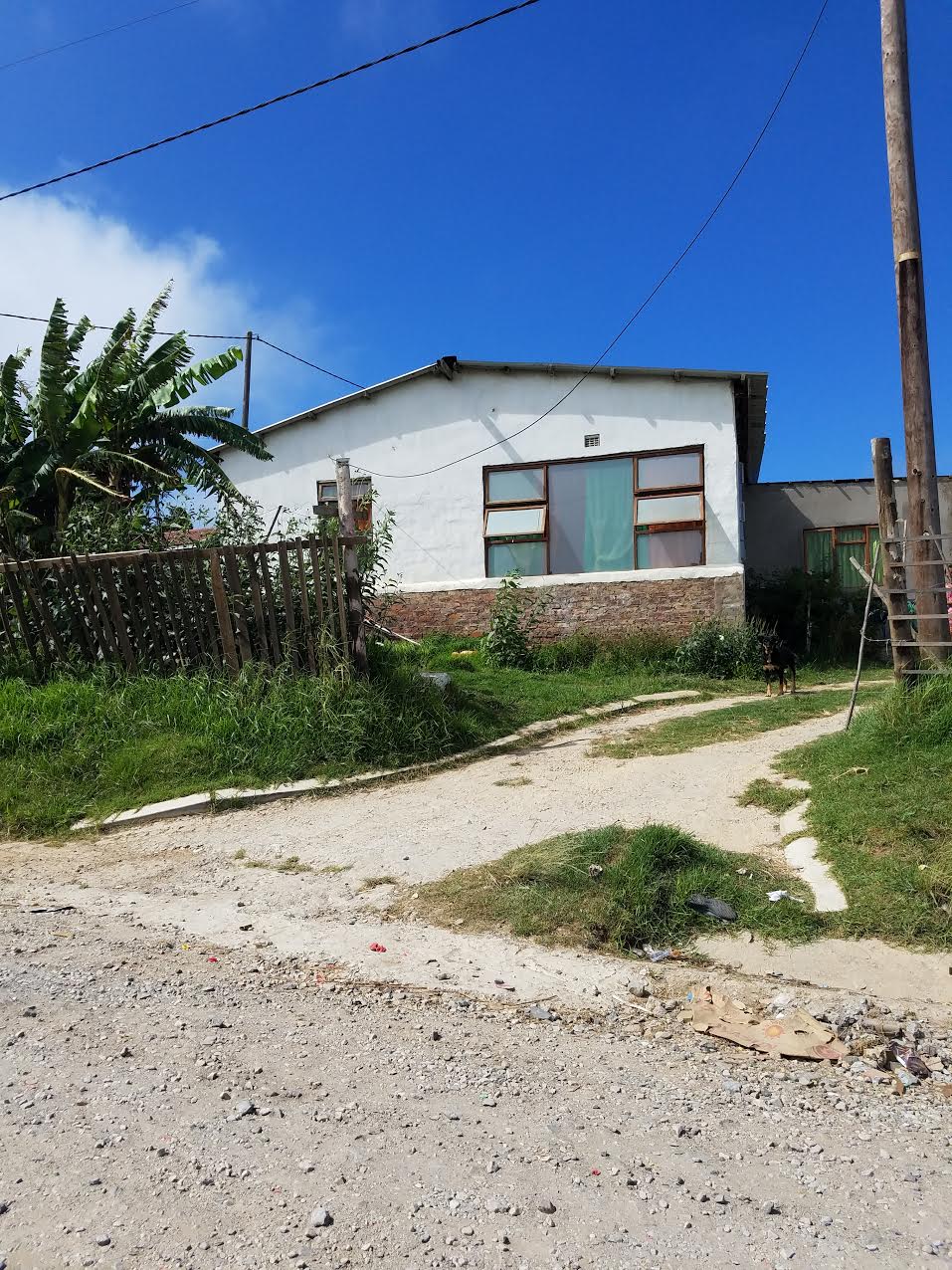
The concrete home.
Inside the 2-bedroom home.
Ntsibeng watched her cousins participate inextra curricular activities, but to her, the answer was always “No, we don’t have enough money.” It was made clear from the start of her matric year, that they would only support their daughter to University.
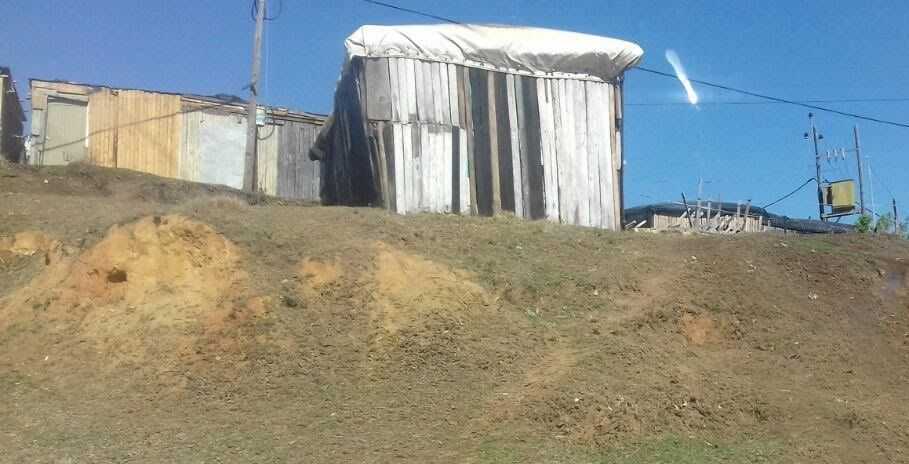
Ntsibeng’s shack.
Inside Ntsibeng’s shack.
Ntsibeng started to flounder.What would she do now?She wanted to continue her education,but was not accepted into University for 2018.Her marks were almost high enough, but not quite.She knew she had to rewrite two of her courses in order to apply again for 2019.
Since that would be at the end of 2018, she decided to get a job to get her through the year.She saw an ad for a job at the hospital at the information desk.She applied, interviewed and got the job.
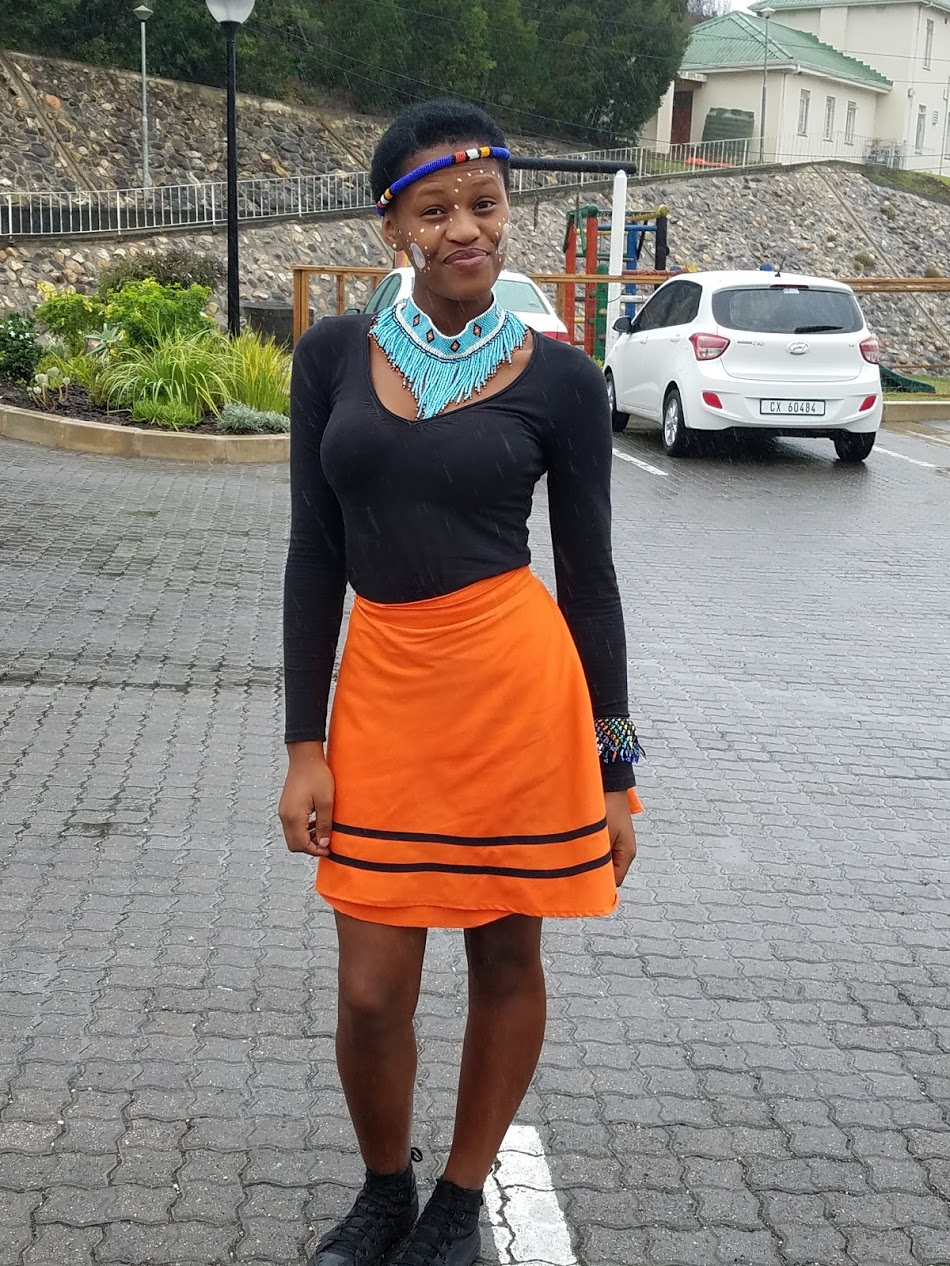
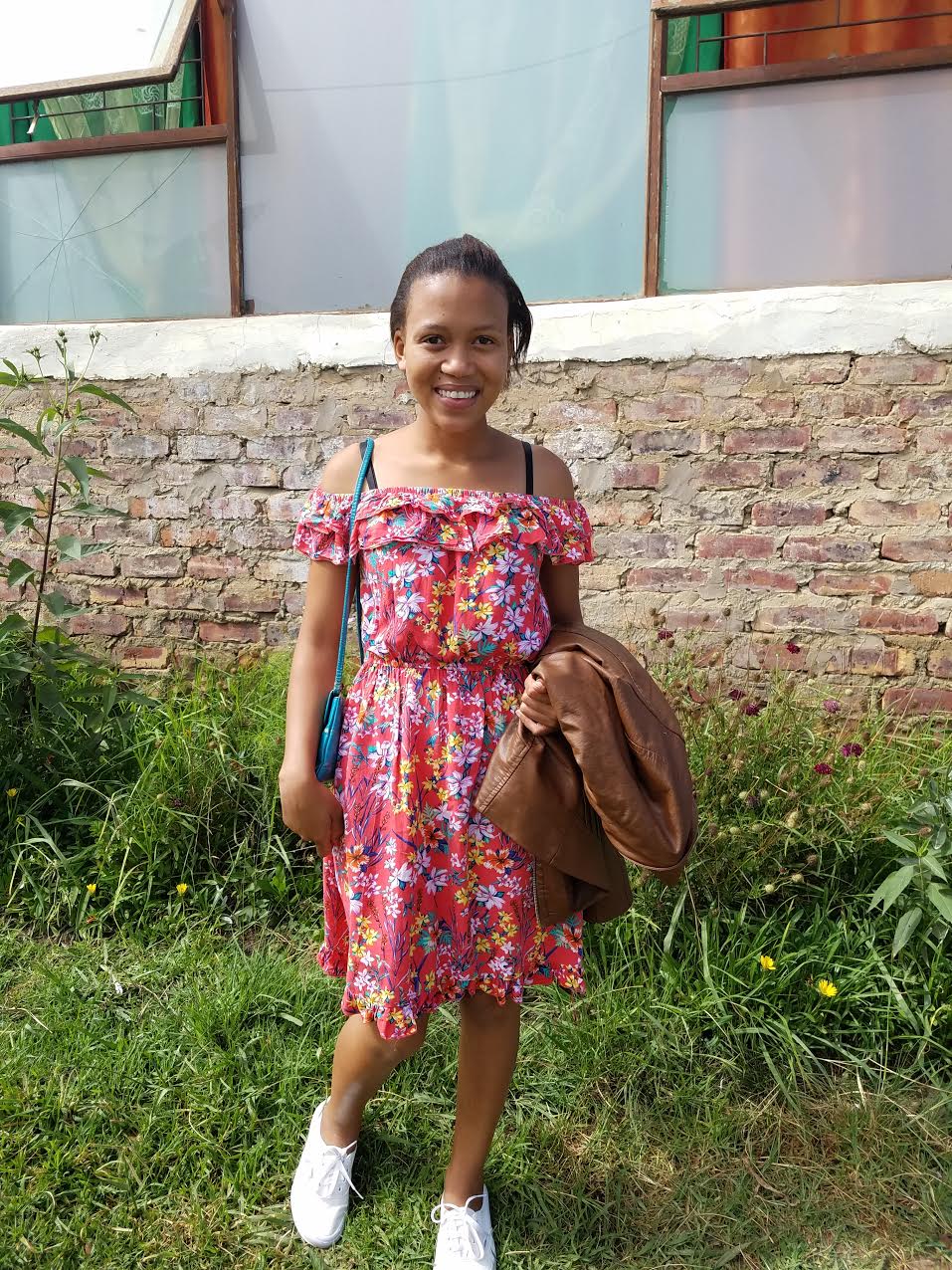
Ntsibeng dressed for a job interview.
Ntsibeng struggles with feeling loved by family.Although she was fortunate that relatives allowed her to stay with them over the years, she never felt as though she was looked at as “their” daughter.Instead, she was always an outsider.Almost part of each family, but not quite.
This year, Ntsibeng was accepted to the University of Fort Hare in the Eastern Cape. She almost started her college career, but not quite. She panicked.She had never been to see the University.She knew she would have to look for accommodations.She had nobody to counsel her or willing to go with her to sort things out.She could not get herself to make the 6-1/2 hour trek there with so much uncertainty.So, she didn’t go. A missed opportunity. A setback for another year.
Ntsibeng is a sweet girl.She continues to bounce back from life’s disappointments.This week she has applied to and is training for a server job in a restaurant. She knows that her aunt and uncle want her out.If she lands this job, she just may be able to rent a shack of her own.
Hopefully next year, 2020, Ntsibeng will be a University Student.She does not need another“almost … but not quite” year!
“Every child deserves a champion — An adult who will never give up on them, who understands the power of connection, and insists that they become the best that they can possibly be.” – Rita Pierson
In my earlier blog post, “The Unprotected”- Part 1, I introduced you to four of the children living in the Lukhanyiso Safe House with Mamma Ella. Now, I will tell you how the Safe House came to be, and introduce you to a few more of Ella’s precious children.
In isiXhosa, the word Lukhanyiso means “The Light”.Ella decided to call the Safe House Lukhanyiso to bring Light to the brokenhearted.
Ella’s Safe House.
I met Ella in 2014 on my first trip to Knysna. Two of the things I love about her is her passion to help people and her passion to share Jesus. She is ALWAYS on the go looking for people in her community to help and share the Good News.
Ella Mapurisa (Mamma Ella) grew up in the Eastern Cape of South Africa.When she was 6-years old, her parents divorced and her mother found employment on a farm, moving Ella out to a very rural area. In order to get an education, Ella had to walk over 6 miles to school every day.She did this with no shoes for several years and vividly remembers getting her first pair of shoes at 12-years old!
Because her mother was an alcoholic, she was not always able to function at her job.Ella soon had to step in and cover for her mom. At just 9-years old, she was trying to go to school and complete her mother’s chores on the farm. She knew that if she didn’t, the two of them would be kicked off of the farm and left homeless. This was a lot for such a young girl to carry.
With no guidance and no support, she dropped out of school at the age of 16.It had become too much. Too far to walk. Too much work to be done on the farm. And no money to buy her books.
In addition to the pressure, her living/work conditions became volatile. It was not safe for a Xhosa girl to be working on a farm… a farm owned by a white Afrikaans farmer… during the Apartheid era. Ella was abused.Unprotected. Trapped.No real education.No money. No connection to people off of the farm.No hope.
Until…At the age of 22, a missionary came to the farm and told her about the love of God. She did not believe there could be such a love.She had never experienced true love from anybody before. She desperately wanted to be loved.But she feared if she accepted this Jesus, she would only prove the missionary wrong.There could not be such a love.Could there?In the days to follow, she accepted Jesus Christ and her life was forever changed.The missionary took her home with seven other children and helped to cultivate a strong faith in her.He put her back in school at the age of 22-years and finally at 25-years old, Ella matriculated from High School.It was then that she moved to Knysna to start her new life. A life full of love, hope and faith.
There is a lot more to Ella’s story, and the impact of it all shaped who Ella is today.She knew that “when” not “if” she was able, she would pay it forward. She would help women and children living in fear and danger. And she would share her Jesus with everyone! Her strong Christian faith and her positive attitude kept her moving forward toward her goal.
Now, self-employed and co-owner of Emzini Tour Company (Township Tours) she knew it was time to help.Time to build a safe house, a refuge, where women and children can go when they are in danger.The tours are designed to show a positive side of the townships, and create an income to support the Safe House.
Ella in traditional Xhosa dress.
Ella
Currently, Ella has 14 children living in her home and has agreed to financially support 12 others.We met 4 of these children in an earlier blog.Today I would like to introduce you to a couple more…
Siblings: Imange and Takunda
Imange is now 10 years old, but came to live with Ella when she was just 5.She is a very gentle and sweet young lady.At the age of 5 years, Imange and her 2-year old brother Takunda were left at home alone when their parents decided to just walk away. Walk away from their two young children! We are not sure how long they were alone, but when the children were found, Imange was actually cooking, feeding and caring for her younger brother.Image was 5-years old! Even so young, Imange showed such great love for her little brother, and still does today.
Imange
Imange
Takunda, a soft-hearted little chatter box, is 7-years old.He really never knew his parents since he was only two when they walked out.His birth name is Lithala, but his grandmother was calling him Madala (which means “old man”).Ella’s husband said, “We can’t have a child being called Madala.I am going to call him Takunda” (Takunda is a Shona word meaning Victory!).
Takunda today.
A younger Takunda.
These two siblings are no longer living in the Safe House. Unfortunately their grandmother insists they live with her so that she can receive government money.
The shack that Imange and Takunda live in with their grandmother.
Knowing that the children would not be cared for properly, Ella continues to pay for all of their schooling, clothes, transport to school, after care, food and other needs that arise.Although they are not under her roof, they are still part of Ella’s family!
Meet Abigail –
Abigail, a complicated 14-year old, comes from a very rough background full of drugs, alcohol and uneducated family members . She is the only person in her family to ever attend school; and that was not on a consistent basis. There was no food and no supervision in her household. As a very young girl, she found her way to Ella’s looking for food. She continued to visit for food and started to trust Ella. Soon Ella learned that at 6-years old Abigail was sexually molested. It was then that Ella moved Abigail in with her.
Abigail
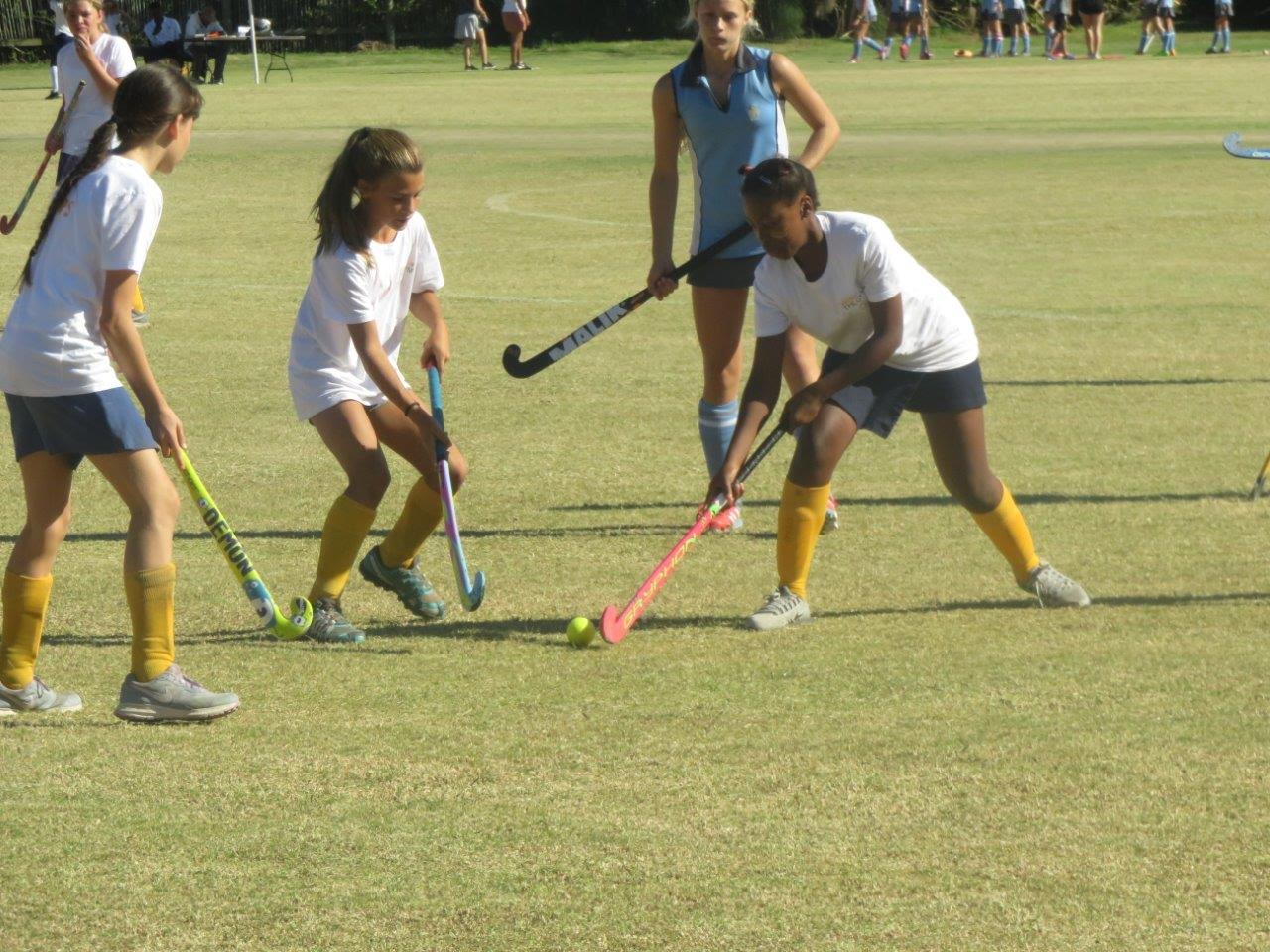
The trauma this young girl survived is devastating.She has a lot to work through and is highly needy for attention. She is healing. Slowly. Abigail now attends a private school in town where she found she has a true talent in Hockey.
Abigail playing hockey.
Please enjoy this Vlog of Ella on one of her township tours:
If you feel called to sponsor one of Ella’s children on a monthly basis, or make a one-time donation, please click on the link below and follow the steps. In the comments, type Lukhanyiso Safe House. All donations are tax deductible and will go directly to the care of Ella’s children. ~Tracy Cooper
“It’s the steady, quiet, plodding ones who win in the lifelong race.”– Robert W. Service
This quote makes me think of my sweet friend, Victoria.I met her last year when she was looking for some tutoring lessons during her matric year (final year) of high school.She is a 19-year old young adult; sweet, unassuming and quiet.So much so, that although her birth name is Priscilla, when her school records got mixed up years ago and her teachers starting calling her Victoria, she NEVER felt the need to correct them.Now, she goes by Victoria.
Victoria – Today
Victoria was born in Nekkies, a part of the township in Knysna that is located right on the N2 (the highway that runs east and west from Capetown to Port Elizabeth.It is probably one of the most dangerous parts of the Knysna township.And here is why:1. Because of its location on the N2, it is easily accessible to everybody and anybody (good or bad).It is one of only two ways in and out of the township.2. Many of the bars/pubs are located in this area, so people gravitate to there and are often under the influence of alcohol and drugs. 3. Many of the “homes” are shacks instead of concrete block homes, making life a little more unstable.
For Victoria’s family, life went on as best it could.They were a Coloured family living in a mostly black Xhosa township.Across the N2, within site, was the all Coloured neighborhood (Hornlee).Because she was coloured, Victoria and her siblings would cross the N2 on foot every day to attend Hornlee Primary School.The native tongue for Coloureds is Afrikaans, while the native tongue for blacks is isiXhosa.It is easier to attend a school that speaks your native language. And at the time that Victoria was in primary school, there was not an Afrikaans school on her side of the N2.
This posed many dangers for a young girl… the greatest of these was crossing the N2. Cars and trucks are traveling at a speed of 45 – 50 mph on a 4-lane highway.There are no crosswalks, no traffic lights, no crossing guards, NO ADULT SUPERVISION.Just children standing, watching, waiting and judging when to cross.It is one of the scariest things I have witnessed here.Once safely on the other side, the children must walk up a path through the bush (the forest as we know it) to get to the school.If alone, you could most certainly be robbed or raped.Victoria mentioned that she only had to walk home by herself one time.She was so scared that she ran as fast as she could and never stopped until she got to the N2.
Born the 5th child in a family of 7 children, Victoria grew up in a household with two very loving, Christian parents. She is one of a few children/teens I know that have a complete family unit.Her father worked hard as a truck driver for years and her mother stayed home to care for their large family.
Victoria’s Matric Farewell Celebration.
In Nekkies, the nine of them lived contently in a shack together, until tragedy struck their family.Not once.But twice.First, Victoria’s older brother (the oldest of the 7 children) was stabbed and killed outside of their home.Victoria was very young at the time, so doesn’t really know or remember the entire story.She has been told it was a senseless act of jealousy.The second tragedy had a greater impact on Victoria’s life.At the age of 11, her family’s shack burned to the ground in the middle of the night.It is believed that the man (a cousin to the family) in the shack directly behind them, was drunk and fell asleep with a candle burning.Both his shack and theirs burned completely.Everyone except Victoria’s little brother escaped. Ornan was 9-years old and died in the fire. Not only was her family grieving the loss of another child, they were now homeless.
The family split up to live with various relatives in the area, moving from place to place for about 4 years.All throughout this unsettled transition, Victoria continued in school.Finally, when she was about to begin grade 8 (High School), her family moved back together to a part of the township called Concordia.There, her father slowly built a concrete home which they are still living in today.
Victoria’s family home, built by her dad.
Victoria did well in school.She is only the second child in her family to graduate (matric) from high school.And the first to receive a “Bachelors”, the highest diploma you can receive in high school (you pass with either a Bachelors, a diploma, or a certificate).Victoria had set herself up to be able to realize her dreams of going to a University. Unfortunately she was “wait-listed” at The University of Western Cape in Cape Town, and ultimately did not get in for this school year.
Dreams crushed? No, just delayed. Gap Year. A year to learn and work before reapplying to University next year. Because of Victoria’s character, a teacher introduced her to a program called TEFL (Teaching English to Foreign Learners) that offers the course right here in Knysna.This program is a 30-day instructional class that prepares you to travel to another country to teach English for 1-year. (Her teacher’s daughter did this and taught English in China).
Victoria will continue to move forward.. slowly, steadily, quietly plodding through this lifelong race.
When I met with her today, we were talking about her plans for this gap year.She explained the TEFL program and told me that she has already enrolled and will begin on March 5.Knowing that neither of her parents are currently working, it caught me off guard that she has so confidently moved along with her plan.I started to question how she will finance this endeavor.She sat there quietly, unassuming telling me that she has managed to come up with the money for the deposit (with the help of her sister) but does not know how she will finance the rest.With faith it will work out. Slowly, steadily and quietly she will make it work.
Victoria is currently $350 U.S. shy of completing the payment for the course.Once she completes the course she will also need funding to travel to the country where she will be teaching. This seems like an impossible dream for a young township girl. It is. But Victoria is already beating the impossible. She stayed in school during a chaotic 4-years. She matriculated with a Bachelors. She was wait-listed by a college. And she figured out how to come up with a $150 U.S. deposit to take this course. This is an amazing opportunity for Victoria during this gap year.She has NEVER been outside of Knysna, much less South Africa. I have confidence that she will be successful in this endeavor.
If you would like to help Victoria, please click on the link below.Any amount will help.All donations are tax deductible and will go directly to help cover her expenses for this gap year experience.Type “Victoria” in the comment section.~Tracy Cooper








 Gingersnaps