God-size Dreams

“God would not have put a dream in your heart if he hadn’t already given you everything you need to fulfill it.”~ Joel Osteen

I must admit, often I feel like I am living in the book, “The Help”, when I am in South Africa.  IF employed, most black african women and coloured women are employed in some capacity of the service industry… Often as domestic workers (or as we would call cleaning ladies/house keepers).

It hits me in the face as I leave our “gated neighborhood” in the morning and see lots of women of color getting out of the taxis on the other side of the gate. (When I talk about taxis, these are 15-passenger vans that travel to and from the township to town.  They generally cost riders about $1-$2 per trip).  The women come by the dozens from the township, as there are about 600 homes in this neighborhood.  And many employ domestic help. 

The ladies show their credentials at the gate, sign in and then begin their walk to the home where they are employed.  It is a strange 1960-ish site.
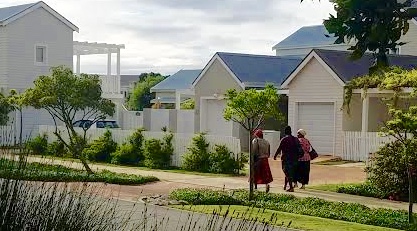
unnamed-14
Domestic workers walking to the home of their employers in the morning.

These women are all domestic workers.  A job coveted by the many that are unemployed.  A job that pays about $12 per day.  That was not a typo.  $12 per day, not $12 per hour. 

At the end of the day, the taxis do not return to the entrance gate of our neighborhood for pick up.  Instead, the women must walk 1-2+ miles to the “Taxi rank” in town to get a ride back to the township.  That is just the women in this neighborhood.  It all depends on where someone works as to how far their trek to the taxi rank may be at the end of the day.  Rain or shine.  Hot or cold.
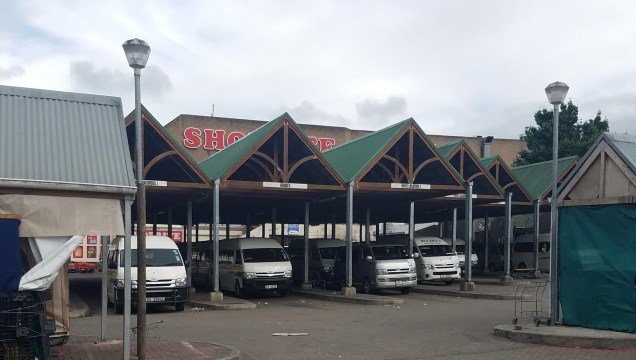
unnamed-17.jpg
The taxi rank in town.

I’ve watched this for years now.  It just doesn’t get any more acceptable to me.  And although most of these women are grateful for the job, it doesn’t make it any less oppressive.

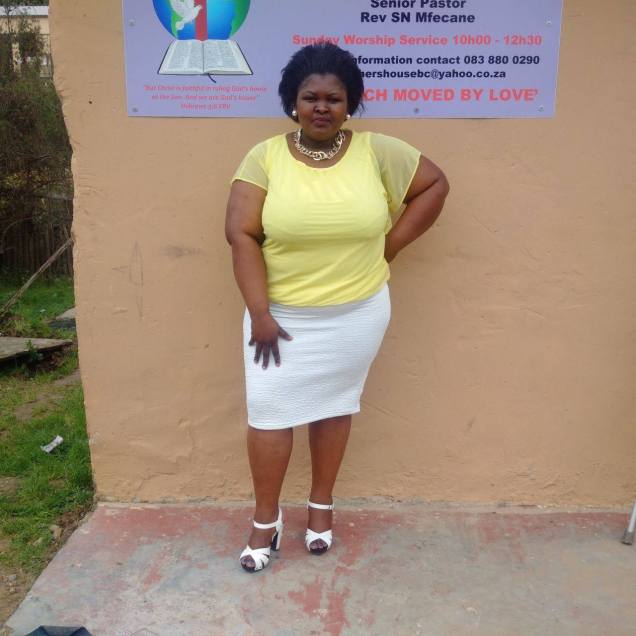
This brings me to my friend Thokozile (Thoko).  A black South African Zulu woman I had the privilege of meeting last year.  And a domestic worker in our neighborhood.

Thoko is a faithful Christian woman raising two sons on her own.  She is an amazing mom to her boys and has taught them to be polite, to do well in school and be grateful for what they have.  Several years ago, when Thoko moved to Knysna, she knew she needed to have a stable place for the boys to grow up.  She saved a little bit of money each payday to be able to purchase her own small home in the Concordia Township.  Since then, she has saved diligently and added on to her home, making it comfortable for she and the boys.   This was/is a project that takes years.  Instead of putting herself in debt, Thoko hires someone to do what they can as she has the money to pay for it.  The total project is not complete, but it is really coming along.  She has been doing this on a salary of $16 per day.
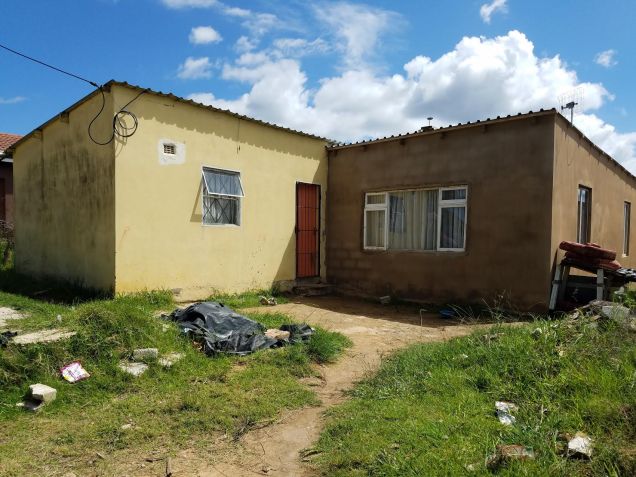
unnamed
Thoko’s home. The brown part is the new addition.

I have never heard a mean word come from Thoko’s mouth.  Not a complaint.  She is always smiling, encouraging, and inspirational.  She loves the Lord and she loves her family.  She is joyful.  She is smart.  She is sweet.  I can go on and on about Thoko.  She is my friend and I have great respect for her.

The reason I met Thoko was because our passion for working with girls in the township intersected last year.   I launched a program for girls in 2016 called Girls Talk (Please read the previous post “Girls Talk).  At that time, I had three women agree to work as a team and lead the group of girls on Saturdays.  It was a great experience for both the ladies and the girls; however the leadership team was burned out by the end of the year.
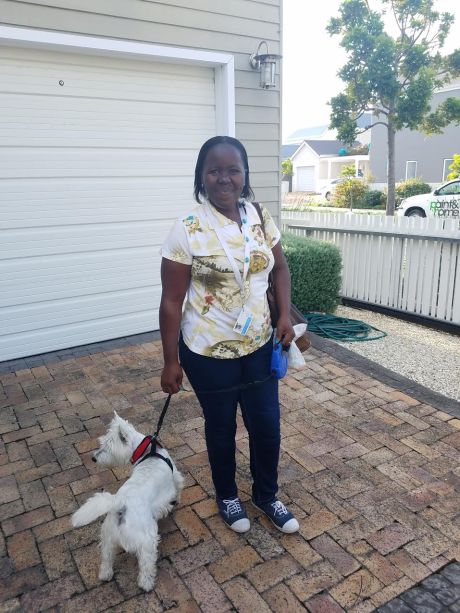
unnamed-19
Thoko wearing her credentials while walking her employer’s dog.

As I got ready to fire up the 2017 Girls Talk group, I was without a leader.  Some good friends of mine knew Thoko and suggested I contact her.   She agreed to come to the information meeting and volunteered right there on the spot to be the 2017 leader.  This was an answer to prayer.  As I mentioned earlier, Thoko does not have daughters.  She works full-time as a domestic worker and is raising two boys on her own.  None of that could stop her passion to work with young girls.

Thoko and I met and planned a loose agenda for the year.  And after I left to go back to the U.S.A., she faithfully met with the girls every Saturday afternoon.  She led them in prayer, discussions, games and community service projects.  She listened intently as the girls talked about things they would never discuss at home.  And she intervened when she found out a male teacher was touching some of the girls inappropriately at school.  She loved and mentored the girls well.

When I returned and met with Thoko in January, I was prepared to hear her say that although it was a great year, she is burned out.  But no. Thoko is ready to volunteer again for 2018.

I have always had such big dreams for Girls Talk.  God size dreams.  Dreams that don’t match up with the resources I have available.  And I always believed if I wanted this program to grow, I would need to figure out how to pay a leader.

This is where our AWESOME GOD shows up big!  As I mentioned in the previous post “Girls Talk”, YFC (Youth for Christ) has agreed to incorporate Girls Talk into their ministry programs.  They believe it is such an important program that a full-time person should be running it.

So what does that mean for Thokozile?  After meeting with her, the YFC immediately offered her the position!  A full-time professional position.  A career.  A passion and dream fulfilled. 

Like me, Thoko has God-size dreams.  This was one of them.  A chance to grow spiritually, intellectually and professionally.  She excitedly seized the opportunity and accepted the position.
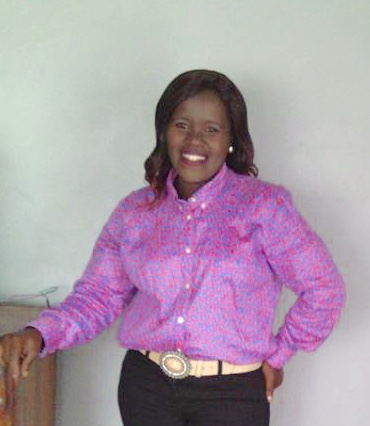
Thokozile

When we left the YFC, she wanted me to drop her off in town instead of driving her home.   Her boys were just getting out of school, so she wanted to meet them at the taxi rank and ride home with them.  She couldn’t wait to share the exciting news.  As she got out of the car, she stood up tall, smiled and turned to me and said “Today I will walk down the street with my head held high.”  I smiled through tears.  I knew what she meant.

She will no longer be a “Servant”, but instead a “Servant Leader”.

Praise be to God for this awesome lady and this amazing opportunity!  ~ Tracy Cooper

Sidenote… Because YFC is an NGO with a limited budget, employees need to raise most of their own support.  Thoko will begin working on March 19, 2018 and her salary will be set at $385 U.S. per month.  Yes, per month.  If you feel called to help support Thoko’s salary monthly or with a one time gift, please click on the attached link and type “Thoko” in the comments.  All donations are tax deductible and will go directly to cover her monthly salary.

https://mygiving.secure.force.com/GXDonateNow?id=a0Ui000000WKZkVEAX

The Unsettled Wanderer

“Not until we are lost do we begin to find ourselves”

Celiwe Maggie is the oldest of three children and was born in the Mdantsane Township of East London, South Africa.

Maggie has been my friend for four years now and I still can’t pronounce her first name correctly.  As innocent as the name Celiwe looks, it is not easy to say.  IsiXhosa has three clicks in the language, each one made with a different part of the tongue.  The letters C, X and Q all have a click when pronounced.  So Maggie, like many others here, allows me to call her by her middle name.

Side NoteUnder apartheid rule, parents used to give their children English names, so that white people wouldn’t struggle to pronounce their African names.  It is believed by some that Xhosa’s were required to give their child an English name, but I don’t know if “required” is true.  However, once the blacks got their freedom back, they went back to giving their children African names.  These children are called the “Born Free Generation.”

Maggie’s dad was a pastor and moved the family around to various places in the Eastern Cape. Since many township churches couldn’t afford to pay the pastor much money, he moved from church to church hoping to support his family.   This was unsettling for a young girl.  She never had one place to call home.

When Maggie was in grade 7, her mom became very ill.  Being the oldest, it was Maggie’s responsibility to care for her mom, siblings, the house and still attend school.  She did her duties and tried to keep up with her school work.  Her mom survived.  Her school work suffered.  Even though she was moved up to the next grade year after year, she did not have the basic foundation needed to pass her matric year (final year) of high school.  She completed the year, but did not pass.

unnamed-15
Maggie (left) when I met her back in 2014.

By the time Maggie was finishing high school, her father was living apart from the family.  He moved to a rural area to pastor a church, while the rest of the family stayed in a township closer to town.  Maggie took advantage of her father not being under the same roof.  She began dating a young man and became pregnant at the young age of 18.  Her parents were shocked and horrified.

One thing I have learned here — sex and birth control are NOT topics of conversation in Xhosa households.  The subjects are completely avoided and ignored.  It is so frustrating as an outsider to see this.  I have had conversations with moms, telling them that they must talk to their children about these things!  Not only is there the risk of pregnancy, but HIV infection rates are very high here.   As many as 1:5 people are thought to be HIV+.  Not only is oral birth control necessary, but condoms are a must!!

Ok… back to Maggie.  After the baby was born, her parents did come to love her new born son.  Soon after his birth, Maggie and the baby moved out to the rural area to stay with her dad.  There, she was starting anew with her little baby boy.

As two years passed, Maggie began to get restless and decided she needed to go back to school to matriculate.  She moved out of her dad’s home to be closer to a high school and left her son behind with her dad.

While living on her own, and now age 21, Maggie became pregnant again.  She made it clear to me that both pregnancies were from boyfriends, consensual.  This time she chose not to tell her parents.  What would she say?  Maybe the first time she didn’t know better.  But this time she did.  So it stayed a secret.  For nine months Maggie kept her secret.  She did not see her parents during this time, so a secret it remained.  But as you probably guessed, unless she was giving the baby up for adoption, the secret was going to have to be revealed eventually!

Maggie
Maggie, posing outside of our church.

As Maggie lay in the hospital laboring with her daughter, her mother happened to call her.  “Why did you not meet with me today?” she asked.  “Where are you?”  “I am in the hospital,” Maggie responded.  And with that, she had to come clean.

Her mother rushed to the hospital, panicked about how to tell Maggie’s dad.  The news did not go well and he shunned her and his new granddaughter for 2-months.

When Maggie’s daughter was just 3-years old, Maggie’s dad passed away.  This meant it was up to Maggie to make the money to support the family.  She tells me that the only work she could find was in a warehouse in Capetown (an 11-hour drive away).  So Maggie packed a few things,  left her two children with her mom and moved to Capetown.  There she stayed for 7 years working various jobs and only visiting with her children one to two times a year.

She thought things were going great when she and her boyfriend decided to start their own business making Gatsby sandwiches (a very “unhealthy” popular sandwich in Capetown).  It was successful.  They were making money.  They bought a car!  But then Maggie came to realize that she was doing all the work and her boyfriend was just spending the money.  So she left.

She moved out to her own flat and decided to open her own business.  Well, that did not go over well with her boyfriend.  She was his livelihood!   He tracked her down, physically beat her, and tried to stab her with a broken bottle.  She escaped wth her life, but not her things.  When she got away from him and ran off, he stayed behind and burned her flat to the ground.  Everything she worked for was now gone.

Broken and scared, she moved back to East London to be with her mom and children.  There she found a job in a supermarket.  But once again became restless.  East London was not where she wanted to be.  Knowing that Maggie wasn’t happy, her friend/sister (yes, I meant to say that) invited her to move to Knysna.  She liked the idea and moved there with her daughter, leaving her son with his grandmother.  After just a year, Maggie’s mom became ill, so Maggie moved her daughter back to East London to care for her grandma and Maggie stayed in Knysna to work.

Maggie has always dreamed of opening a Gatsby Sandwich stand again.  One like she had in Capetown.  She put a decent business plan together and Kurt and I looked it over.  It was good.  It could work. 

But that dream will not be realized in Knysna.

Restless… Maggie is about to be on the move again.  She just sent me a message this morning saying she is going to move back to Capetown to start her life over.

I love Maggie.  She is smart.  She is sweet.  She is my friend.  However, I fear she will never be happy.  Never truly be settled.  Never root herself in one place.

To my friend Maggie, the unsettled wanderer … may you find joy and happiness one day soon. ~Tracy Cooper

unnamed-14
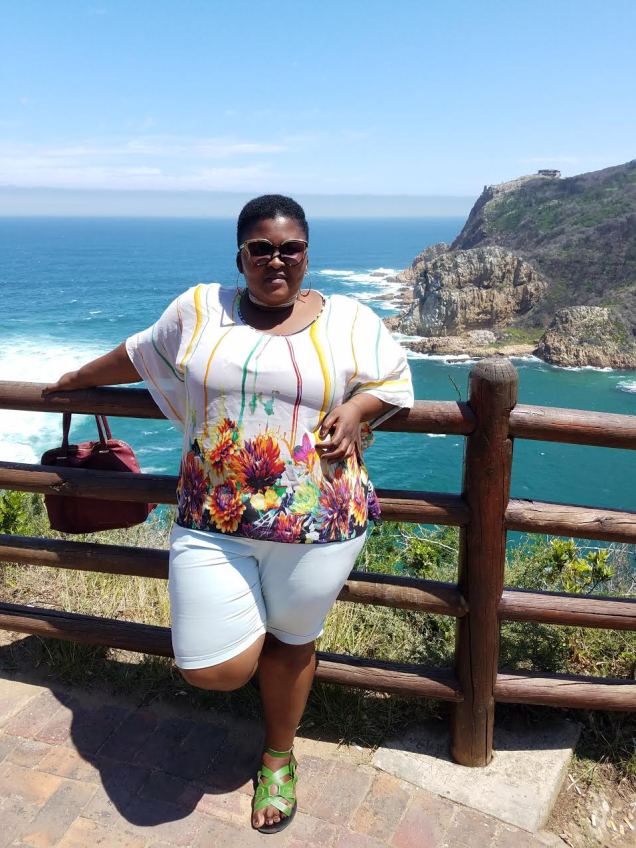
I took Maggie to view Knysna from The Heads (Jan. 2018)

What is a South African “Township”

township

I realized after I posted my previous blog “Growing up in the Township”, that many of you may not know what a “township” is.

When Kurt and I first decided to come with a mission team (2014) to South Africa to work in a township, I had no earthly idea what a “township” was.  I envisioned a “village”.  Huts.  No running water.  Little to no electricity.  Women carrying baskets on their heads, etc.  You know, National Geographic stuff.

That is not what I found.  And although a township is not like the “village” I pictured, it is vastly different from first world living as we know it… I would call it second world.

In South Africa, the terms ‘township’ and ‘location’ are used interchangeably. My friends in the township usually call it “The Location”, while my friends in town call it “The Township”.  Anyway, the terms refer to an undeveloped segregated urban area.  These were areas set aside for non-whites to reside … Blacks, Coloureds and Indians during colonialism and then again during the  apartheid era.  They are built on the periphery of towns and cities.

During the apartheid era, “white only” living areas were established and non-whites that were living in these areas at the time were evicted and forced to move into segregated townships. Separate townships were established for each of the three designated non-white race groups (Blacks, Indians and Coloured: mixed race).  If you read Trevor Noah’s book, “Born a Crime”, you will learn a lot about South African Coloureds.  He puts a humorous spin on a not so humorous life.

Since apartheid ended in 1991, all people have legally been allowed to reside where they choose. However, financial strain has kept lots of people of color living in the townships.  This is because although whites are a minority in South Africa, they are the financial majority.

My first time here, Kurt and I took a “township tour” (Which I highly recommend if you ever visit South Africa).  I convinced myself that people who live in the townships must try to do anything and everything they can to move out.  To live in town.  In neighborhoods like many of us.  Why?  Because I saw this as oppression.  They MUST rise above this way of living. 

Then I started to ask questions of the friends I made living in the township…

“If you dreamed of and had success in financial terms, what would you do with your money?” I asked.  “I would build a house for my mom”, is the #1 answer.  Mom is the answer, because most likely she is the one who has not walked away from the family.  She may or may not be a good mom.  She may be a faithful mom or a scarce alcoholic.  She may be tender and sweet or violent and angry.  It doesn’t matter.  She stayed!

So the question that follows is, “Where would you build this house?”  Not to my surprise the answer is “Knysna”.  This area is so absolutely beautiful.  It is the paradise that many inland South Africans come to vacation.  Hills, mountains, beaches… a coastal town so full of God’s beauty!

Next question, “Where in Knysna would you build this house?”  This is where I fully expect them to name one of the gated, golf-course communities.  The pristine neighborhoods with large homes overlooking the Indian Ocean. No. “The Location” is the answer.  Not sometimes.  Always!

Stunned, I ask, “Why?”…  “Because this is our community.  This is where our family lives.  This is our home.”

I get it

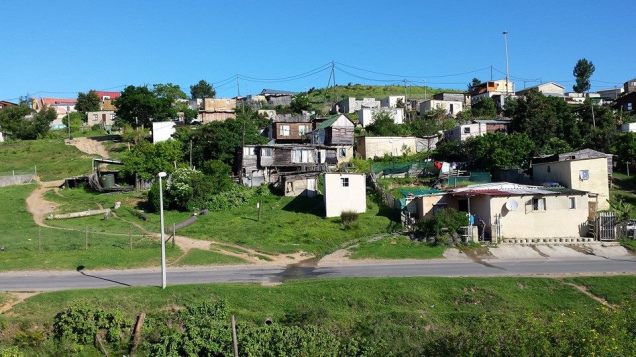
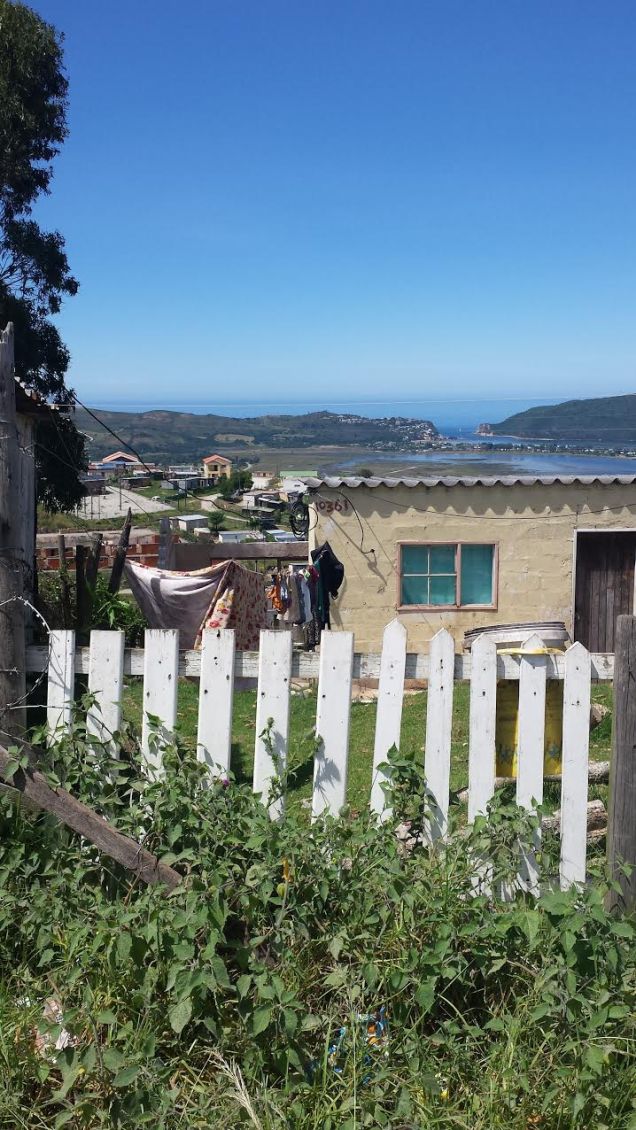
As an outsider, I saw falling down shacks, rows of small concrete homes and narrow dirt roads.  I saw unfamiliar life styles, people of color flooding the streets and children playing with old tires and sticks.  I saw roaming unattended animals… dogs, pigs, cows, donkeys and chickens.  I saw everything that does NOT resemble MY community at home.  I saw poverty and feared the danger it may bring.

20170213_141701
Large shack

But as I traveled through the township daily over the years and got to know the people…  I mean really got to know them, I started to see things differently.  Now I see the homes of families and friends.  I see convenience stores, hair salons and tailors (all located in metal shipping containers or shacks) as local businesses convenient to walk to.  I see the primary schools and high schools children attend. And the creches (preschools) caring for babies and toddlers.  I see the clinic, library, churches and fire station helping to serve basic needs. I see security in a community.

unnamed

That is why I get it now.  These are many of the same things I want, need and demand in my own community.

The problem is this… with 55,000 people living in the township in Knysna, the infrastructure is not sufficient to meet the needs of this community.  School classrooms have 50 and above children per class.  50+.  OK teacher friends… Just picture that!  Standing room only.  Not enough desks, chairs nor textbooks for the students.  And believe it or not, even with those numbers, they do turn kids away.  Some children may not be offered an education!  Can you even imagine?! 

Finally, although the townships have many things needed in the life of the residents; people who live there cannot avoid trips into town.  They must travel to town for jobs, groceries, retail stores, skill centers, hospitals, police stations, post offices, gas stations and many other things.  Very few own cars, so they must walk or take a taxi (15-seater van) that travels to and from town.

Things aren’t easy for those that live in the township.  There are stumbling blocks around EVERY corner.  But it is life.  It is township life.  And every day that I am here, I have the privilege of doing life together with my new friends.

I serve an awesome God.  ~ Tracy Cooper

Growing up in the Township

“Freedom isn’t going through life unscathed, it’s choosing to not let what has hurt you bind you.” ~ Leo Christopher

As mentioned in my first blog, my hope this year is to share the stories of the people I have met in Knysna, South Africa.  Circumstances and experiences have shaped all of us, helping to create OUR very own unique story.  With the permission of my friends, I would like to share their stories with you.  Some of the events are very sensitive, so I will often change the names to protect my friends.

Today’s story is being told to give you a glimpse into the types of things many young girls experience and endure living in a township in South Africa.

Meet Bulelwa…

Born in the Eastern Cape Province of South Africa in the city of Port Elizabeth (PE),  Bulelwa grew up in a household that included her parents and two younger siblings.  Her mother is Zulu and her father is Xhosa.  And although her parents were never married, they lived as a family unit for several years.  Her dad was a Police Officer and her mom had a job in a laundry mat.  You may think that all sounds normal; but here in the townships it is an anomaly for both parents to be part of the household AND both to have jobs.  Although they lived as a family unit, it was not always a happy one.  Bulelwa’s dad is an alcoholic and often raged in anger against she and her mom.  By the grace of God, her two younger siblings were spared his violence.

At age 15, Bulelwa was sent to live with and take care of her sick grandmother (Her dad’s mom) in another township.  In the Xhosa culture, it is customary for parents to send their children to live with other relatives for various reasons.  This can be due to such things as financial issues, hopes for a better chance in the area where a relative resides, taking care of a sick relative, and many other reasons.  The point is this, many children in the townships do not live with their biological mom or dad.  It can be typical for a child to be raised by a grandmother, aunt, cousin, etc.  Bulelwa’s situation was no different.

So, as a 15-year old teenage girl, Bulelwa was expected to go to school and care for her grandmother.  She was moved away from her mother, siblings and friends, attending a different school all together.  This is a lot for a young teenager.  Yet, she had no choice.

As she did what was expected of her, she came to find out that her uncle (her dad’s brother) had expectations of his own.  He raped her.  This lonely, scared young girl was raped by her uncle!  This man, who should be helping to protect her while she is separated from her family and caring for HIS mother, raped her.  Bulelwa was trapped and eventually became pregnant.

Just imagine a young teenage girl feeling helpless.  Pregnant with a baby she does not want.  She begged her mom to let her abort the baby or put it up for adoption, as she knew that every time she looked at the baby, she would be reminded of the horrific acts of her uncle.  Her mother said “No” to both.  She brought Bulelwa home and promised her that she would raise the baby as her own, and that Bulelwa could be her “older sister”.  Once again, Bulelwa had no choice.  She was only 16-years old and her mother would not sign the papers allowing her to give the baby up for adoption.

Well, things didn’t quite work out that way.  Many times as a teenager, Bulelwa would want to hang out with her friends and her mother would tell her she couldn’t because she had a baby she must care for.

Due to the pregnancy, Bulelwa had to drop out and miss an entire year of school.  A couple of  years later she had to drop out and miss another year of school to care for her mom.

So… fast forward to 2014 when I met her.  Bulelwa was 20-years old, in grade 11 and had a 3-year old daughter.   Let that sink in… 20-years old, in grade 11 and had a 3-year old daughter.   I know, this sounds like a hopeless situation.  And at times I think it did to Bulelwa too.  But God had greater plans for Bulelwa’s life.  And although I have told you only SOME of the major roadblocks along her life journey, each one shaping her, creating her story;  she has never let her circumstances define who she is.

Bulelwa is an OVERCOMER!  She has not allowed the circumstances of her past to stop her from chasing her dreams.  I am happy to tell you that she graduated High School in December 2015.  She is now in her final year at South Cape College (a 3-year program), where she will graduate with a certificate of higher education in business.  AND, THE BEST PART OF THE STORY… she loves her daughter more than anything in the world.

Our God is an awesome God!   ~Tracy Cooper